|
|
|
|
September 15, 2020 GoMRI eNews
|
|
The Gulf of Mexico Research Initiative (GoMRI) and the Sea Grant oil spill outreach team are pleased to announce and extend an invitation to attend Gulf Coast state events that will highlight GoMRI contributions to research, recovery, and resilience from a state-based perspective.
|
|
|
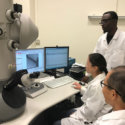
Scientists with the Gulf of Mexico Research Initiative (GoMRI) have been investigating solvent-free formulations to improve the safety and efficiency of dispersant technologies used in oil spill response. One promising area involves halloysite clay nanotubes.
|
|
|
Students’ engagement with science that connects with something that is relevant in their lives can increase the meaningfulness of science application and help solidify its importance.
|
|
|
Posted on September 10, 2019
Predicting where oil will go can be one of the most challenging aspects of marine oil spill response.
|
|
|
Posted on September 11, 2018
Scientists used drifters, drones, satellite imagery, and air/water measurements to investigate how local and regional ocean processes in the Gulf of Mexico influence where surface oil from the leaking Taylor Energy Site travels.
|
|
|
Posted on September 12, 2017
Researchers use numerical models to simulate oil spill scenarios and predict where oil will go, but the many factors that affect the oil’s path creates uncertainty in the predictions. Shitao Wang quantifies the uncertainty of ocean models to gauge the reliability of oil fate predictions.
|
|
|
Posted on September 13, 2016
There are hundreds of deep-pelagic fish species in the Gulf of Mexico, but we know very little about their taxonomy, diversity, and population sizes. Max Weber plans to catch fifteen individual specimens of each of the 500 known deep-sea Gulf fish species to help us better understand these organisms and how the Deepwater Horizon oil spill may have impacted them and environment.
|
|
|
Study Observes Complex Toxic Impacts of Oil on Seaside Sparrow Gene Expression
Transcriptome analysis indicates a broad range of toxic effects of Deepwater Horizon oil on Seaside Sparrows. Bonisoli-Alquati, A.; Xu, W.; Stouffer, P.C.; Taylor, S.S. 2020. Science of the Total Environment, 720, 137583.
Study Finds Drag Resulting from Bacterial Attachment Slows Rise of Oil Droplets in Water Column
Bacteria forming drag-increasing streamers on a drop implicates complementary fates of rising deep-sea oil droplets. White, A.R.; Jalali, M.; Boufadel, M.C.; Sheng, J. 2020. Scientific Reports, 10, 1
|
|
Raw data: CTD, optical, and oxygen data from the remotely operated undulating towed vehicle (scanfish) collected during the R/V Pelican cruise PE16-19A in the northern Gulf of Mexico from 2016-03-31 to 2016-04-02 -- data link
Mooring data at 150 m collected aboard R/V Point Sur during the GoMix III cruise (PS18-28) in the northern Gulf of Mexico from 2018-06-22 to 2018-10-05 -- data link
Dataset for: Oxygen isotopes (δ18O) trace photochemical hydrocarbon oxidation at the sea surface -- data link
|
|
NASEM to Hold Virtual Public Meeting of the Committee on Oil in the Sea IV
The National Academies of Sciences, Engineering, and Medicine will hold the first public meeting of the Committee on Oil in the Sea IV: Inputs, Fates, and Effects on September 18th at 10 am Central Time. The committee will hear 20-minute briefs from GoMRI and other study sponsors, discuss the sponsor's needs, perspectives, and expectations, and receive feedback on the committee’s task from stakeholders. Register here to attend the online event. Visit the event page to learn more and access an agenda for the event.
Save The Date! Sea Grant to Host “Decade of Discovery State Showcases” Series
As GoMRI research comes to a close, the Sea Grant Oil Spill Science Outreach Team will host events to celebrate GoMRI’s unique contributions to research, recovery, and resilience in each Gulf state over the past decade. All events can be attended via Zoom or Facebook Live. See below for more information about your state’s event:
- Texas: A September 25th event called “GoMRI and Texas: Celebration of a 10-Year Partnership” will take place at 10 am Central Time. Register here to attend on Zoom or tune in via Facebook Live.
- Florida: An October 16th event called “Ten Years of GoMRI Science: Honoring Discoveries, Contributions, and Legacies in Florida” will take place at 12 pm Central Time. Register here to attend on Zoom or tune in via Facebook Live.
- Alabama: An October 23rd event called “Ten Years of Discovery: Celebrating the Legacy of GoMRI in Alabama” will take place at The Lodge at Gulf State Park in Gulf Shores, AL. A reception will be held at 6 pm Central Time followed by the main program at 6:30 pm. Register here to attend the event in person or on Zoom or tune in via Facebook Live.
- Mississippi: An October 29th event called “A Salute to the Gulf of Mexico Research Initiative’s Contribution to the State of Science in Mississippi” will take place at 1 pm Central Time. Register here to attend on Zoom or tune in via Facebook Live.
- Louisiana: A November 10th event called “Commemorating 10 Years of GoMRI Science in Louisiana” will take place at 2 pm Central Time. Register here to attend on Zoom or tune in via Facebook Live.
Upcoming Webinars Hosted by the Sea Grant Oil Spill Outreach Team
|
|
|
|
|
|
|