GoMRI eNews · Aug 18, 2020 · ← All issues
Welcome to the GoMRI eNews.

Keeping you current on emerging Gulf science and the people investigating the effects of oil spills on the environment and public health.

August 18, 2020                                                                    GoMRI eNews

Stories

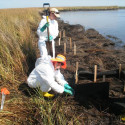
Studies Explore the Dynamics of How Offshore Oil Spills Affect Coastal Environments

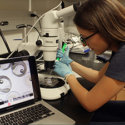
Laboratory Studies Examine How Oil Spills Affect Physical and Behavioral Aspects of Gulf Fish

Studies Examine Public Health Issues Following Deepwater Horizon

Grad Student Altomare Analyzes Health Risks to Children Playing in Oiled Beaches

From the Archives

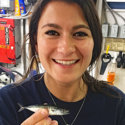
Grad Student Pruzinsky Uses Morphological Patterns to ID Young Tuna for Population Assessments

Posted on August 6, 2019
The Deepwater Horizon oil spill overlapped with the spawning activities of many ecologically and economically important tuna species.

Study Analyzes How Environmental Disturbances Affect Whale Recovery

Posted on August 14, 2018
Researchers modified a matrix population model to include the impact of a disturbance and study the recovery process for large marine mammal populations. They applied the model to identify key components in the recovery process for Gulf of Mexico sperm whales following a disturbance such as the Deepwater Horizon oil spill.

Study Assesses How Chemical Dispersant Affects Oil Plume Behavior

Posted on August 15, 2017
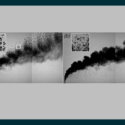
Scientists conducted laboratory experiments with a simulated oil plume to assess how chemical dispersants affect a crude oil jet as it transitions into a plume under crossflow conditions.

Study Details Underwater Oil Plume Formation and Droplet Size Distribution

Posted on August 10, 2016
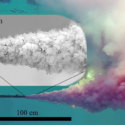
Scientists simulated an underwater blowout to analyze the formation, path, and duration of oil plumes. They noted that the simulated blowout formed two plumes, one due to momentum and plume buoyancy and another due to the buoyancy of individual oil droplets separating from the first plume.

Publications

Study Observes Persistent Transport Patterns That May Help Predict How Pollutants Travel in the Northwestern Gulf of Mexico
Persistent Lagrangian Transport Patterns in the Northwestern Gulf of Mexico. Gough, M.K.; Beron-Vera, F.J.; Olascoaga, M.J.; Sheinbaum, J.; Jouanno, J.; Duran, R. 2019. Journal of Physical Oceanography, 49, 2, 353-367.
 
Study Highlights Importance of Data Transparency to Scientific Advancement (Includes Classroom Activity!)
The Gulf of Mexico Research Initiative Information and Data Cooperative: Data Transparency and Data Sharing + Classroom Activity. Ellis, S.; Fillingham, K. 2019. Current: The Journal of Marine Education, 33, 1, 42-44.

Data

Dataset for: On the nature of the turbulent energy dissipation beneath non-breaking waves -- data link

Dataset for: Sunlight induced molecular progression of oil into interfacial material and dissolved organic matter -- data link

Whole genome DNA sequences of Gulf of Mexico invertebrates -- data link

Announcements

Upcoming Webinars Hosted by the Sea Grant Oil Spill Outreach Team