GoMRI eNews · Aug 4, 2020 · ← All issues
Welcome to the GoMRI eNews.

Keeping you current on emerging Gulf science and the people investigating the effects of oil spills on the environment and public health.

August 4, 2020                                                                    GoMRI eNews

Stories

Laboratory Studies Examine How Oil Spills Affect Physical and Behavioral Aspects of Gulf Fish
Oil from the Deepwater Horizon incident and the chemical dispersants applied during response efforts affected many ecologically and economically important fish species in the Gulf of Mexico.

Studies Examine Public Health Issues Following Deepwater Horizon
Large environmental disasters can have a wide range of impacts on communities in affected areas, yet we have a limited understanding about how disasters affect public health.

Grad Student Altomare Analyzes Health Risks to Children Playing in Oiled Beaches

Smithsonian Highlights Discoveries on the Super Powers of Oil-Degrading Bacteria

From the Archives

Study Finds Slick Oil has Greater Impact than Source Oil on Fish Development

Posted on July 30, 2019
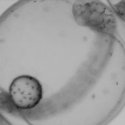
Scientists analyzed effects from non-weathered source oil (collected directly over the Deepwater Horizon wellhead) and weathered slick oil (collected from surface skimming) on the microRNAs of mahi-mahi embryos.

Study Finds “Business as Usual” for Hypoxic Zone Following Deepwater Horizon

Posted on July 31, 2018
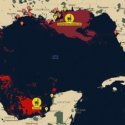
Researchers compared long-term data from low-oxygen (hypoxia) studies to determine if the Deepwater Horizon incident affected the Gulf of Mexico seasonal hypoxic area.

Beneath the Horizon: A Web Resource for the 1979 and 2010 Oil Spills

Posted on July 27, 2017
Scientists and outreach personnel created an on-line resource that examines two major oil spills in the Gulf of Mexico: The Deepwater Horizon in the northern Gulf and the Ixtoc in the southern Gulf. Beneath the Horizon website, developed by the C-IMAGE research group and Jake Price Productions, explores these spills, the people who coped with and responded to these disasters, and expectations for recovery.

Bringing Marine Snow to the Oil Transport Forecast

Posted on August 4, 2016
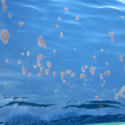
Evidence suggests that when oil interacts with particles in the marine environment, it can form larger, rapidly sinking particles called marine snow.

Publications

Study Describes Novel Framework for Simulating Ocean Currents Using Autoregressive Logistic Regression Models
Statistical simulation of ocean current patterns using autoregressive logistic regression models: A case study in the Gulf of Mexico. Chiri, H.; Abascal, A.J.; Castanedo, S.; Antolínez, J.A.A.; Liu, Y.; Weisberg, R.H.; Medina, R. 2019. Ocean Modelling, 136, 1-12.
 
Study Develops Floating Oil Transport Model to Evaluate Oil’s Potential Impacts to the Florida Straits
Lagrangian simulation of oil trajectories in the Florida Straits. Drouin, K.L.; Mariano, A.J.; Ryan, E.H.; Laurindo, L.C. 2019. Marine Pollution Bulletin, 140, 204-218.

Data

Dataset for: Large‐eddy simulation model for the effect of gas bubble dissolution on the dynamics of hydrocarbon plume from deep‐water blowout -- data link

GoMix I mooring data, northern Gulf of Mexico, 2016-09-18 to 2017-08-18 -- data link

Droplet size distribution of large-scale turbulent oil-in-water jets -- data link

Announcements

Upcoming Webinars Hosted by the Sea Grant Oil Spill Outreach Team