|
|
|
|
Marine protists are single-celled planktonic creatures that form the base of the marine food web and perform important ecosystem services, including driving photosynthesis and the carbon and nitrogen cycles.
|
|
|
Here are highlights from selected GoMRI-funded peer-reviewed publications related to advancements in knowledge about physical ocean processes that affect how an oil spill moves.
|
|
|
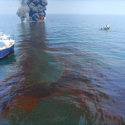
Hydrocarbon-degrading microbes living in ocean environments consumed and metabolized oil droplets following Deepwater Horizon, which significantly influenced the oil’s fate in the Gulf of Mexico.
|
|
|
Posted on June 4, 2019
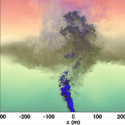
Scientists assessed an economical 2D model simulation of deep-ocean oil plume dynamics against 3D model results using conditions similar to Deepwater Horizon to better understand point-source buoyant convection, which affects the oil’s spreading rate and environmental impact.
|
|
|
Posted on June 7, 2018
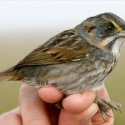
Researchers analyzed the resource use of Seaside Sparrows residing in salt marshes impacted by large-scale disturbances like Deepwater Horizon and Hurricane Isaac to understand the effects on these indicators of ecological change.
|
|
|
Posted on June 6, 2017
A 12-day science expedition on the exploration vessel Ocean Intervention II embarks June 11 to investigate how oil, gas, and chemical dispersants affect marine life and their environment deep in the Gulf of Mexico. Scientists and outreach personnel onboard the vessel will interact with the public and school-age children using streaming video, social media, and question-and-answer sessions.
|
|
|
Posted on June 7, 2016
Responders to the Deepwater Horizon spill used large quantities of dispersant to facilitate oil biodegradation, but could a different method be safer for the environment?
|
|
|
Study Identifies Promising Model Organisms for Studying Ecophysiological Response to Oil Spills
Candidatus Macondimonas diazotrophica, a novel gammaproteobacterial genus dominating crude-oil-contaminated coastal sediments. Karthikeyan, S.; Rodriguez-R, L.M.; Heritier-Robbins, P.; Kim, M.; Overholt, W.A.; Gaby, J.C.; Hatt, J.K.; Spain, J.C.; Rossello-Mora, R.; Huettel, M.; Kostka, J.E.; Konstantinidis, K.T. ISME Journal, 13, 2129–2134 (2019)
Study Gives Contaminant and Biometric Analyses for Two Hake Species
Hepatobiliary analyses suggest chronic PAH exposure in Hakes (Urophycis spp.) following the Deepwater Horizon oil spill. Struch, R.E.; Pulster, E.L.; Schreier, A.M.; Murawski, S.A. Environmental Toxicology and Chemistry, 38, 12, 2740-2749 (2019)
|
|
Radiographic assessment of pectoral fin bone maturation in bottlenose dolphins (Tursiops truncatus), as a novel technique to accurately estimate chronological age -- data link
Zooplankton data collected in association with the Mobile Bay discharge plume aboard R/V Point Sur cruise PS16-20 (PTS02) in the northern Gulf of Mexico from 2016-04-08 to 2016-04-10 -- data link
Dataset for: A novel gravity valve and its application in a 3D printed centrifugal fluidic-system for solid phase extraction (SPE) -- data link
|
|
Webinar Series on Human Health Impacts Following Oil Spills
The Sea Grant Oil spill Outreach Team is hosting three online workshops titled "Detecting the true, potential, and perceived impacts to human health following an oil spill." Question and answer sessions will follow presentations. The first workshop was held on June 8th and addressed impacts on air quality. The second will cover impacts on water quality (date TBD), and the third will cover impacts on human health (date TBD). More information is available at: https://gulfseagrant.org/oilspilloutreach/presentations/webinar-series-detecting-the-true-potential-and-perceived-impacts-to-human-health-following-an-oil-spill/
Workshop Report on Emergency Responder and University Researcher Collaboration
A report is now available that draws from workshops hosted by the Sea Grant Oil Spill Outreach Team where emergency responders and oil spill science researchers from around the Gulf of Mexico gathered to learn from one another. The report is available at: http://masgc.org/oilscience/Researcher-Responder-Workshop-Report.pdf
Workshop Report on Delaware Bay Oil Spill-Related Needs and Resources
A report is now available on the proceedings from the January 2019 workshop hosted by the Sea Grant Oil Spill Outreach Team titled "Oil in the Bay: 15 years after the Athos I spill." The Gulf Sea Grant Team partnered with the Sea Grant programs of Delaware, New Jersey, and Pennsylvania and hosted a special session at the Delaware Estuary Science and Environmental Summit that highlighted oil spill-related needs and resources in the Delaware Bay and strengthened networks.The report is available at http://masgc.org/oilscience/Summary-OilSpillSession-PDEsummit.pdf
Upcoming Sea Grant Oil Spill Webinars
Keep your eye out for these events that are in the works that the Sea Grant Oil Spill Outreach Team will host: "Breaking it down: Oil in the environment;" "Every snow often oil, microbes, and sediment get together and sink" (on marine oil snow); and "Oysters: Adapting to a changing Gulf, a three-part series." Details will be available at https://gulfseagrant.org/oilspilloutreach/presentations/
Call for Papers: Predicting Hydrocarbon Fate in the Ocean
Editors invite papers that explore the fate of hydrocarbons in the ocean using multi-component numerical models, especially studies that explore the relationship between two or more processes, including microbial ecology, sediment transport, oil/gas plumes, and physical mixing and transport processes. They also welcome papers on related experimental aspects of these topics, i.e. that can contribute to modeling parameterization, calibration, and verification. Read more here.
|
|
|
|
|
|
|