GoMRI eNews · Mar 17, 2020 · ← All issues
Welcome to the GoMRI eNews.

Keeping you current on emerging Gulf science and the people investigating the effects of oil spills on the environment and public health.

March 17, 2020                                                                    GoMRI eNews

Stories

Study Measures Size of Droplets Aerosolized from Bubbles Bursting on an Oil Slick

Grad Student Wigren Shows It Takes Guts to Explore How Oil Affects Fish’s Microbiomes

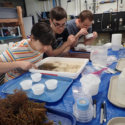
BioBlitz Provides Treasure Trove of Marine Biodiversity Data

From the Archives

Study Reveals Corals’ Cellular Response to Oil and Dispersant Exposure

Posted on March 5, 2019
Scientists used next-generation sequencing to analyze deep-sea corals following the Deepwater Horizon incident.

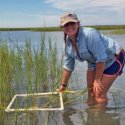
Grad Student Ziegler Compares Gulf and East Coast Ecosystems for Predicting Saltmarsh Food Web Responses to Disturbances

Posted on March 13, 2018
Major disturbances such as oil spills can significantly affect populations of vulnerable saltmarsh species, which may result in greater impacts to the overall saltmarsh food web. Shelby Ziegler believes that a better understanding of what saltmarsh predator-prey interactions look like today can help identify changes in the food web following disturbances in the future.
Grad Student Dykstra Sees Global Applications for Local Ocean Circulation Maps

Posted on March 14, 2017
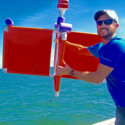
When Deepwater Horizon oil approached coastal environments, it was unclear how river water entering the Gulf of Mexico would affect the oil’s transport and fate. Steve Dykstra uses drifters and ship-deployed sensors to study how freshwater plumes disperse in the coastal environment over different seafloor topography.

Publications

Study Compares Plankton Productivity Before and After Deepwater Horizon
Potential influence of the Deepwater Horizon oil spill on phytoplankton primary productivity in the northern Gulf of Mexico. Li, Y.; Hu, C.; Quigg, A.; Gao, H. Environmental Research Letters, 2019, 14 094018

Study Uses "Live" Methane-Saturated Oil in Droplet Size Distribution Experiments
Oil droplet size distributions in deep-sea blowouts: Influence of pressure and dissolved gases. Malone, K.; Pesch, S.; Schlter, M.; Krause, D. Environmental Science & Technology, 2018, 52, 11, 6326-6333

Data

Dataset for: Large-Eddy Simulations of Oil Droplet Aerosol Transport in the Marine Atmospheric Boundary Layer -- data link

Benthic footprint of the Deepwater Horizon oil spill data analyzed from sediment cores collected aboard R/V Ocean Veritas and R/V Gyre cruises in the northern Gulf of Mexico from 2010-09-16 to 2010-10-22 -- data link

Dataset for: Oil-mineral flocculation and settling velocity in saline water -- data link

Announcements

Sea Grant Releases Educational Videos on Seafood Safety and Fish Coping with Oil
The Sea Grant Oil Spill Outreach Team in collaboration with O’Chang Studios developed animated videos appropriate for public and classrooms use: “How fish cope with exposure to oil” and “Ensuring the safety of seafood after the Deepwater Horizon oil spill.” Viewers can learn about seafood safety testing methods used after the oil spill and can learn how fish's bodies process oil after exposure. Videos are available here.

Project Activities

Get to Know CWC Researcher Dr. Jill Olin
Olin uses ecological tracers to investigate how the terrestrial component of saltmarsh food webs responded to Deepwater Horizon oiling, especially Seaside Sparrows. Learn more about her research and background here!
 
Registration Now Open for ECOGIG Ocean Discovery Camp
The 2020 camp will take place June 1-5 at the University of Georgia in Athens, GA, and focuses on students ages 11-14. The camp offers a unique hands-on approach to marine science and ocean conservation issues, utilizing exploration, projects, and crafts to teach students about the tools and technology used in marine science research. Register your child today!