|
|
|
|
February 18, 2020 GoMRI eNews
|
|
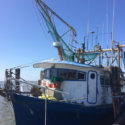
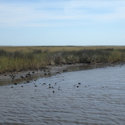
The Texas Gulf Coast is experiencing a rapid increase in oil refining and transport activities, which also increases the risk of spill-related impacts to its coastal bays and estuarine ecosystems.
|
|
|
Researchers conducted a survey of more than 2,500 U.S. Gulf Coast residents to learn how their lives have been affected since Deepwater Horizon. Survey results show that most people who had social support were less likely to screen positive for depressive symptoms in the years following the oil spill.
|
|
|
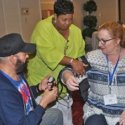
A journey reveals that her voice matters. A trip changes his work motivation. The theme of disaster response frames both of these touching and inspiring science stories.
|
|
|
Posted on February 5, 2019
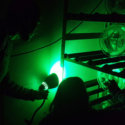
Researchers conducted mesocosm experiments that examined how juvenile eastern oysters respond to salinity variations in the presence of oil and dispersed oil.
|
|
|
Posted on February 6, 2018
Researchers evaluated training sessions for community health workers that included disaster-related components to provide improvements in their curricula. Feedback from participants and staff identified public health, cultural competency, community advocacy, and peer listening as the most useful training modules.
|
|
|
Posted on February 16, 2017
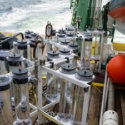
Researchers measured polycyclic aromatic hydrocarbon (PAH) concentrations in water collected near the Deepwater Horizon site to understand how sinking particles, such as marine snow, influence the residence time of PAHs in the upper ocean.
|
|
|
Study Assesses Oil Impacts on Waste Accumulation and Excretion in Young Mahi-Mahi
The effects of Deepwater Horizon crude oil on ammonia and urea handling in mahi-mahi (Coryphaena hippurus) early life stages. Wang, Y.; Pasparakis, C.; Stieglitz, J.D.; Benetti, D.D.; Grosell, M. Aquatic Toxicology, Volume 216, November 2019, 105294
Study Examined Oil Effects on Atlantic Croaker's Social Behavior and Group Cohesion
Oil exposure alters social group cohesion in fish. Armstrong, T.; Khursigara, A.J.; Killen, S.S.; Fearnley, H.; Parsons, K.J.; Esbaugh, A.J. Scientific Reports, 9, 13520 (2019)
|
|
Single-locus barcodes and demultiplexed ddRADseq data for comparative population genomic analysis of the mesopelagic shrimp species Acanthephyra purpurea, Systellaspis debilis, and Robustosergia robusta -- data link
Imaging and oceanographic data from a thin layer of phytoplankton and surrounding zooplankton abundances on July 24, 2016 -- data link
Velocity and density data in the Gulf of Mexico and North Atlantic from 2017-05-02 to 2019-04-05 measured by Electro-Magnetic Autonomous Profiling Explorer (EM-APEX) floats deployed during R/V Walton Smith cruise WS17121 -- data link
|
|
March 12 Sea Grant Seminar on Herding Oil At the Ocean's Surface
The Sea Grant Oil Spill Outreach Team will host a seminar in Metairie, Louisiana that covers the history, science, and logistics of using collecting agents for an oil slick. This seminar will coincide with a Coast Guard Area Committee meeting. Speakers include Tim Nedwed (ExxonMobil Upstream Research Company), James Hanzalik (Clean Gulf Associates), David Cooper (SL Ross Environment Research Limited), Srijan Aggarwal (University of Alaska Fairbanks), and George John (The City College of New York). More information available here.
Sea Grant Releases Educational Videos on Seafood Safety and Fish Coping with Oil
The Sea Grant Oil Spill Outreach Team in collaboration with O’Chang Studios developed animated videos appropriate for public and classrooms use: “How fish cope with exposure to oil” and “Ensuring the safety of seafood after the Deepwater Horizon oil spill.” Viewers can learn about seafood safety testing methods used after the oil spill and can learn how fish's bodies process oil after exposure. Videos are available here.
|
|
|
|
|
|
|