GoMRI eNews · Jan 21, 2020 · ← All issues
Welcome to the GoMRI eNews.

Keeping you current on emerging Gulf science and the people investigating the effects of oil spills on the environment and public health.

January 21, 2020                                                                    GoMRI eNews

Stories

Study Confirms Sun Exposure Increases Oxygen Molecules in Oil Slicks

Grad Student Woodyard Assesses Vulnerability of Hundreds of Fish Species to Oil Exposure

Study Ranks Parameters in Oil Biodegradation Models and Quantifies Dispersant Effects

From the Archives

Study Simulates Effectiveness of Chemical Dispersant Applications

Posted on January 10, 2019
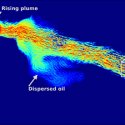
Scientists developed a modeling framework that includes small-scale fluid dynamics to investigate how dispersant application during Deepwater Horizon may have affected oil biodegradation and the environment.

Modeling Study Develops Approach to Compare Oil Slick Dispersion Scenarios

Posted on January 16, 2018
Researchers developed an algorithm that accounts for different wind speeds, oil types, natural dispersion processes (breaking waves), and chemical dispersant application to analyze oil slick evolution scenarios. The model results indicate how the oil slick will become thinner and dissipate over time as a result of dispersion.
Study Summarizes Current Knowledge on Marine Oil Snow During and After Deepwater Horizon

Posted on January 19, 2017
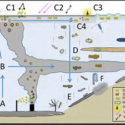
Scientists conducting oil spill research participated in the 2013 Marine Oil Snow Sedimentation and Flocculent Accumulation (MOSSFA) workshop. The researchers discussed the formation and fate of oil-associated marine snow and its ecological impacts on deep-sea environments and made recommendations for future marine oil snow research.

Publications

Study Shows Clay Halloysites Stimulate Oil-Degrading Bacteria 
Bacterial proliferation on clay nanotube Pickering emulsions for oil spill bioremediation. Panchal, A.; Swientoniewski, L.T.; Omarova, M.; Yu, T.; Zhang, D.; Blake, D.A.; John, V.; Lvov, Y.M. Colloids and Surfaces B: Biointerfaces, Volume 164, 1 April 2018, Pages 27-33.

Study Describes Relationship Among Religion, Alcohol Misuse, and Deepwater Horizon
Oil spill disruption and problem drinking: Assessing the impact of religious context among Gulf Coast residents. Drakeford, L.; Parks, V.; Slack, T.; Ramchand, R.; Finucane, M.; Lee, M.R. Population Research and Policy, 2019, https://doi.org/10.1007/s11113-019-09520-7.

Data

Soil and water quality data from coastal Louisiana, 1978-03-08 to 2018-01-23 -- data link

Benzo(a)Pyrene analysis of sediment from the Chandeleur Islands, Louisiana in June 2015 -- data link

Metabolic gene transcriptional responses in Hepa1c1c7 cells -- data link

Announcements

Latest News! 2020 Gulf of Mexico Oil Spill & Ecosystem Science Conference
  • Posters.The UPS store at the Tampa Marriott Hotel can print posters for presenters. Email your file to UPS ahead of time, and pick up your poster upon arrival. More information here.
  •  
  • Hotel Reservation. The conference hotels are the Tampa Marriott Water Street Hotel (the conference venue) and the Barrymore Hotel. Attendees who stay at either hotel will receive discounted registration. When registering for the conference, please enter your hotel confirmation number to receive the discount.   
  • Registration The full conference registration fee covers entry to all conference activities, including workshops, breaks, and breakfast. When registering for the conference, please enter your hotel confirmation number to receive the discount (Marriott Water Street hotel and Barrymore hotel only). 
- Regular $650 ($550 with conference hotel reservation).
- Student $300 ($250 with conference hotel reservation).
- One-day Regular $300 (no hotel reservation required).
- Workshop-Only $250 (attendance only at a workshop and not any part of the conference).
- Onsite registration will be available subject to a $50 late fee

Project Activities

RECOVER Video Highlights Ph.D. Student Alexis Khursigara
Alexis investigates how crude oil affects fish behavior and interactions. Her findings can help inform fisheries management practices following an oil spill. Watch the short video to learn more about her research!
 
CARMMHA Researchers Attend World Marine Mammal Conference
Consortium members attended this year’s conference in Barcelona, Spain, and presented eighteen posters and presentations. View the full list of CARMMHA’s presentation and posters here.