|
|
|
|
December 10, 2019 GoMRI eNews
|
|
Because oil and water don’t mix easily, oil droplets in the ocean environment tend to aggregate into larger masses, which hinders microbial degradation.
|
|
|
The Gulf of Mexico Research Initiative (GoMRI) congratulates its Research Board Vice Chair Dr. Margaret Leinen for receiving the 2019 American Geophysical Union’s Ambassador Award.
|
|
|
When a marine oil spill occurs, it is vital to quickly determine where and when to dispatch response operations.
|
|
|
Posted on December 6, 2018
During the Deepwater Horizon incident, some models predicted that oil would reach the Florida coastline. However, much of the oil became trapped in cyclonic-like currents, which are eddy flows associated with the Loop Current, and exited the Gulf of Mexico without reaching the Florida coast.
|
|
|
Posted on December 7, 2017
Researchers used naturally occurring radioisotopes to quantify the footprint of sedimented marine oil snow on the Gulf of Mexico seafloor following the Deepwater Horizon incident.
|
|
|
Posted on December 6, 2016
Scientists are finding fascinating discoveries in the largely unknown deep waters of the Gulf of Mexico. Some fishes, invertebrates, and bacteria have evolved a special adaptation to living in dark conditions using bioluminescence.
|
|
|
Study Finds Boundary Layer Turbulence Plays Significant Role in Material Transport
The role of horizontal divergence in submesoscale frontogenesis. Barkan, R.; Molemaker, J.M.; Srinivasan, K.; McWilliams, J.C.; D'Asaro, E.A. Journal of Physical Oceanography, 2019, Volume 49, 1593–1618
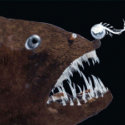
Study Shows No Symbionts During Anglerfish Development but are Acquired from Environment
Characterization of the microbiome and bioluminescent symbionts across life stages of Ceratioid Anglerfishes of the Gulf of Mexico. Freed, L.L.; Easson, C.; Baker, L.J.; Fenolio, D.; Sutton, T.T.; Khan, Y.; Blackwelder, P.; Hendry, T.A.; Lopez, J.V. FEMS Microbiology Ecology, Volume 95, Issue 10, October 2019, fiz146
|
|
Neonatal histopathological findings enabling further understanding of the pathophysiological mechanisms of pregnancy failure in the common bottlenose dolphin (Tursiops truncatus) -- data link
Ultrasonographic findings associated with failed pregnancy in the bottlenose dolphin (Tursiops truncatus) -- data link
Metagenomics characterization of red snapper microbiome following CEWAF and pathogen exposure -- data link
|
|
Latest News! 2020 Gulf of Mexico Oil Spill & Ecosystem Science Conference
- Registration The full conference registration fee covers entry to all conference activities, including workshops, breaks, and breakfast. When registering for the conference, please enter your hotel confirmation number to receive the discount (Marriott Water Street hotel and Barrymore hotel only).
- Regular $650 ($550 with conference hotel reservation).
- Student $300 ($250 with conference hotel reservation).
- One-day Regular $300 (no hotel reservation required).
- Workshop-Only $250 (attendance only at a workshop and not any part of the conference).
- Onsite registration will be available subject to a $50 late fee
|
|
|
|
|
|
|