|
|
|
|
November 12, 2019 GoMRI eNews
|
|
The Gulf of Mexico Research Initiative (GoMRI) is pleased to announce an updated Sea Grant publication that incorporates the latest science that answers the top five most frequently asked oil spill questions by people who depend on a clean and healthy Gulf of Mexico.
|
|
|
Much research takes place in laboratories where scientists can carefully control and manipulate conditions, but the results only tell part of a story. The next step is learning how laboratory findings play out in the real world.
|
|
|
Following Deepwater Horizon, there was concern about how the oil spill might affect marine life. Since then, scientists have learned more about how polycyclic aromatic hydrocarbons (PAHs) affect marine organisms, especially commercially and recreationally important fisheries.
|
|
|
Researchers examined the biological and physiological response of phytoplankton to oil and oil plus dispersant in laboratory experiments.
|
|
|
Posted on November 6, 2018
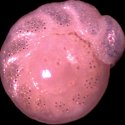
Researchers examined the isotopic composition of single-celled organisms (foraminifera) in seafloor sediment for evidence of the documented marine oil snow event that followed Deepwater Horizon.
|
|
|
Posted on November 9, 2017
Researchers used population models to investigate how reduced survival and fertility after environmental disturbances, such as an oil spill, might affect sperm whale populations. Model simulations indicated that the magnitude of a disturbance had a stronger impact on recovery from lethal and sublethal effects than its duration.
|
|
|
Posted on November 10, 2016
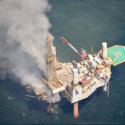
Research consortia involved in the GoMRI self-organized a rapid response to characterize the waters around the Hercules 265 rig. They found evidence of an immediate response from the surrounding environment’s microbial community to elevated methane concentrations.
|
|
|
Study Assesses Influence of Bacteria on Phytoplankton Oil Response
The phytoplankton taxon-dependent oil response and Its microbiome: Correlation but not causation. Severin, T.; Erdner, D.L. Frontiers in Microbiology, March 2019, Volume 10, Article 385
Study Improves How Clay Particles Stabilize Oil-in-Water Emulsions for Spill Response
Investigation of amphiphilic polypeptoid-functionalized halloysite nanotubes as emulsion stabilizer for oil spill remediation. Yu, T.; Swientoniewski, L.T.; Omarova, M.; Li, M.-C.; Negulescu, I.I.; Jiang, N.; Darvish, O.A.; Panchal, A.; Blake, D.A.; Wu, Q.; Lvov, Y.M.; John, V.T.; Zhang, D. ACS Applied Materials & Interfaces, 2019, 11, 31, 27944-27953
|
|
Immune function of peripheral blood mononuclear cells from healthy pregnant bottlenose dolphins (Tursiops truncatus) -- data link
Using blood gas analysis and capnography to determine oxygenation status in bottlenose dolphins (Tursiops truncatus) following the Deepwater Horizon oil spill -- data link
Quantifying denitrifier functional marker gene abundance from sediments associated with co-occurring Avicennia sp. and Spartina sp. in Chandeleur Islands salt marsh seven and eight years post Deepwater Horizon from 2017-05-30 to 2018-06-13 -- data link
|
|
December 14 Sea Grant Seminar on Oil Spill Impacts to the Florida Panhandle
Join the Sea Grant oil spill outreach team in Pensacola for the free half-day seminar titled Shining Light on Deepwater Horizon Impacts to the Florida Panhandle. Guest speakers include Markus Huettel (Florida State University), Cheryl Lassitter (NOAA), Dianne Ingram (U.S. Fish and Wildlife Services), Alissa Deming (Dolphin Island Sea Lab), and Richard Snyder (Virginia Institute of Marine Science). The seminar will be live-streamed for those who cannot attend in person. Read the flyer. Register to attend in person here.
Sea Grant Oil Spill Publications Available in Vietnamese!
Three of Sea Grant's popular publications have been translated into Vietnamese: Frequently asked questions: Dispersants edition, Federal emergency response framework for oil spills: Stafford Act and Oil Pollution Act, and Is it safe? Examining health risks from the Deepwater Horizon oil spill. Limited hard copies are available upon request. Other Sea Grant publications in Vietnamese: Storms and spills and Where did the oil go? A Deepwater Horizon fact sheet. See all translated publications at https://gulfseagrant.org/oilspilloutreach/publications/ (scroll down to the "Translated Publications" section).
Latest News! 2020 Gulf of Mexico Oil Spill & Ecosystem Science Conference
- Hotel Reservations There are reserved room blocks at the Tampa Marriott Water Street Hotel (the conference venue) and the Barrymore Hotel. Attendees who stay at either hotel will receive discounted registration. When registering for the conference, please be prepared to enter your hotel confirmation number to receive the discount. Book Marriott hotel here. Book Barrymore hotel here.
- Early Registration Ends November 27 The full conference registration fee covers entry to all conference activities, including workshops, breaks, and breakfast. When registering for the conference, please enter your hotel confirmation number to receive the discount (Marriott Water Street hotel and Barrymore hotel only).
- Early Bird (on or before November 27, 2019) $550 ($450 with conference hotel reservation).
- Regular (after November 27) $650. ($550 with conference hotel reservation).
- Student - $300 ($250 with conference hotel reservation).
- One-day Early (on or before November 27) $250 (no hotel reservation required).
- One-day Regular (after November 27) $300 (no hotel reservation required).
- Workshop-Only $250 (attendance only at a workshop and not any part of the conference).
- Onsite registration will be available subject to a $50 late fee
|
|
|
|
|
|
|