|
|
|
|
August 6, 2019 GoMRI eNews
|
|
The Gulf of Mexico Research Initiative is pleased to announce a new Sea Grant publication that outlines what scientists have learned about how oil exposure affects birds.
|
|
|
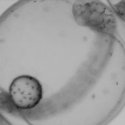
Scientists analyzed effects from non-weathered source oil (collected directly over the Deepwater Horizon wellhead) and weathered slick oil (collected from surface skimming) on the microRNAs of mahi-mahi embryos.
|
|
|
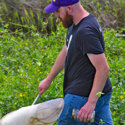
Estuarine marshes in coastal Louisiana face numerous threats such as sea-level rise, salt water intrusion, and contamination threats such as oil spills that can lead to marsh loss and changing habitats.
|
|
|
Scientists traced and analyzed methane bubbles as they ascended from a deep seafloor seep to the ocean’s surface and compared results to two computer models’ output to better understand methane dissolution processes.
|
|
|
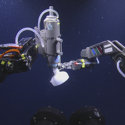
Scientist and author M. Mitchell Waldrop accompanied researchers, funded by the Gulf of Mexico Research Initiative, as they conducted the largest experimental simulation to-date of the Deepwater Horizon oil intrusion.
|
|
|
Posted on July 31, 2018
Researchers compared long-term data from low-oxygen (hypoxia) studies to determine if the Deepwater Horizon incident affected the Gulf of Mexico seasonal hypoxic area.
|
|
|
Posted on July 27, 2017
Scientists and outreach personnel created an on-line resource that examines two major oil spills in the Gulf of Mexico: The Deepwater Horizon in the northern Gulf and the Ixtoc in the southern Gulf. Beneath the Horizon website, developed by the C-IMAGE research group and Jake Price Productions, explores these spills, the people who coped with and responded to these disasters, and expectations for recovery.
|
|
|
Posted on July 27, 2016
Scientists developed the first molecular-level comparison of photochemical effects on surrogate and Macondo (MC252) oil to better understand this weathering process and the toxicity mechanisms it produces.
|
|
|
Study Finds Oil Exposure Disrupts Fish Tolerance of Common Environmental Stressors
Oil toxicity and implications for environmental tolerance in fish. Khursigara, A.J.; Ackerly, K.L.; Esbaugh, A.J. Comparative Biochemistry and Physiology Part C: Toxicology & Pharmacology: Volume 220, June 2019, Pages 52-61
Study Offers Alternate Way to Estimate Density of Sperm Whales
Assessing seasonality and density from passive acoustic monitoring of signals presumed to be from pygmy and dwarf sperm whales in the Gulf of Mexico. Hildebrand, J.A.; Frasier, K.E.; Baumann-Pickering, S.; Wiggins, S.M.; Merkens, K.P.; Garrison, L.P.; Soldevilla, M.S.; McDonald, M.A. Frontiers in Marine Science, February 2019, Volume 6, Article 66
|
|
Decay rates of polycyclic aromatic hydrocarbons (PAHs) measured during the standardized sediment-oil-agglomerate (sSOA) experiment from 2010-10-22 to 2013-12-16 -- data link
Concentrations of polycyclic aromatic hydrocarbons (PAHs) measured during the standardized sediment-oil-agglomerate (sSOA) experiment from 2010-10-22 to 2013-12-16 -- data link
Dataset for: Tritonibacter horizontis gen. nov., sp. nov., a member of the Rhodobacteraceae, isolated from the Deepwater Horizon oil spill -- data link
|
|
Call for 2020 GoMOSES Abstracts Coming this Month!
There are twenty-seven sessions accepted for the 2020 Gulf of Mexico Oil Spill & Ecosystem Science Conference. Keep an eye out for an email announcing the call for abstracts this month or click here for latest conference information.
August 13 Sea Grant Oil Spill Seminar on Overlooked Species
Learn about species that media often overlook during a spill and those species' potential roles in guiding restoration efforts. Speakers include Patrick Schwinn (foraminifera), Frank Hernandez (zooplankton & ichthyoplankton), Kayla Kimmel and Barret Fortier (sturgeon, alligator gar, fur-bearers, vegetation), Scott Zengel (fiddler crabs, marsh periwinkle), Linda Hooper-Bùi (insects, spiders), and Michael Polito (marsh food webs). The seminar will be held at the Southeast Louisiana National Wildlife Refuges Complex in Lacombe, Louisiana. Click here to register and attend in person. Click here to join the webinar online.
|
|
CSOMIO Launches Summer Outreach Program
This post highlights Lucia Gil Morales, who introduces young students in Tallahassee and the surrounding areas to the wonders of ocean and atmospheric science using fun, colorful hands-on activities. She is a Florida State University (FSU) marine ecology undergraduate student and member of the FSU Center for Ocean-Atmospheric Prediction Studies (COAPS) outreach team.
Video Game to Feature ECOGIG Research
Beyond Blue (from Never Alone publisher E-Line Media) is a PC and console game that follows Mirai, the leader of a research team using groundbreaking technologies to see, hear, and sense the ocean. The game’s narrative and adventure elements will challenge the player to make high-stakes decisions during the expedition. Developers utilized input from ECOGIG PI Dr. Samantha Joye and other leading ocean experts to craft an experience that reflects the wonder and mystery of deep-sea exploration. Watch the Beyond Blue trailer or visit the game’s website for more information.
RECOVER Tuesday Tool Profile Features Respirators
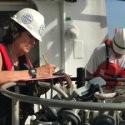
The consortium’s MAHI cruise utilized oil samples collected directly from the Deepwater Horizon wellhead in 2010. Researchers, therefore, utilized extra safety gear such as respirators to minimize exposure while generating oil-exposed water treatments, using ammonia to conduct water chemistry experiments and releasing mahi from the experimental recovery tank.
|
|
|
|
|
|
|