GoMRI eNews · Jul 9, 2019 · ← All issues
Welcome to the GoMRI eNews.

Keeping you current on emerging Gulf science and the people investigating the effects of oil spills on the environment and public health.

July 9, 2019                                                                    GoMRI eNews

Stories

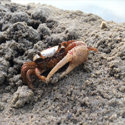
Study Finds Oil Impacts on Fiddler Crabs May Also Affect Broader Marsh Health

How Grad Student Niles Gets to Know Crude Oil at a Molecular Level

Study Finds Dispersed Oil, But Not Oil Alone, Negatively Affects Phytoplankton

From the Archives

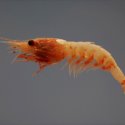
Study Evaluates Short-Term Oil Toxicity in Deep-Sea Crustaceans

Posted on June 26, 2018
Researchers conducted 48-hour toxicity experiments on deep ocean crustaceans (200 – 1000 m depth) to determine the impact threshold levels for one polycyclic aromatic hydrocarbon (PAH, 1-methylnaphthalene) under various environmental conditions.

Study Identifies Oil Carbons Associated with Deepwater Horizon in Terrestrial Birds

Posted on June 27, 2017
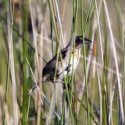
Scientists analyzed the carbon composition in Seaside Sparrow tissues to learn if oil from the 2010 spill was incorporated into the terrestrial food web. The researchers found reduced radiocarbon and stable carbon concentration levels in the feathers of birds captured at oiled sites compared with birds from non-oiled sites, which is consistent with a fossil oil source.

Identifying Effective, Food-Grade Dispersants for the Future

Posted on July 5, 2016
Oil spill responders currently have the option to treat oil spills with a synthetic dispersant called Corexit, however scientists continue to search for alternatives. In this search, scientists seek to develop an understanding of the specific mechanisms that drive dispersion and identify an effective combination of food-grade components.

Publications

Study Reports Damselfish Near Oil Platforms and Artificial Reefs Off Alabama Coast
First record of the non-indigenous Indo-Pacific damselfish, Neopomacentrus cyanomos (Bleeker, 1856) in the northern Gulf of Mexico. Bennett, C.; Robertson, A.; Patterson, W. BioInvasions Records 8(1): 154–166, https://doi.org/10.3391/bir.2019.8.1.17

Study Advances Understanding of How Air-Sea Fluxes Affect Ocean Circulation
Stability and sea state as limiting conditions for TKE dissipation and dissipative heating. Smith, A.W.; Haus, B.K.; Zhang, J.A. Journal of the Atmospheric Sciences, 76, 689–706, https://doi.org/10.1175/JAS-D-18-0142.1

Data

Dataset for: A 3D printed centrifugal microfluidic platform for solid-phase-extraction and fluorescent detection of spilled oil in water -- data link

Data collected to analyze the burst frequency of each valve tested to achieve accurate sequential control of micro-valving system -- data link

CTD/Rosette data collected aboard the R/V Point Sur cruise PS16-20 in the Mississippi Bight, Gulf of Mexico from 2016-03-30 to 2016-04-10 -- data link

Announcements

Save-the-Date August 13 Sea Grant Seminar on Overlooked Species
The Sea Grant Oil Spill Science Outreach Team is planning a new seminar that will focus on species that media often overlook during a spill and those species' potential roles in guiding restoration efforts. The August 13 seminar will be held at the Southeast Louisiana National Wildlife Refuges Complex in Lacombe, Louisiana. It will also be live-streamed. More information soon available here. 

Project Activities

CARMMHA Screens Dispatches 2 Documentary at Chicago’s Brookfield Zoo
Consortium researchers gathered in the Great Bear Wilderness classroom for a showing of Dispatches from the Gulf 2. They answered questions from an audience of ~160 zoo patrons, employees, volunteers, and members of the public about how the Deepwater Horizon oil spill impacted marine mammals and their habitats.
 
RECOVER Tuesday Tool Profile Features Fish Tracking
Ph.D. student Alexis Khursigara uses LoliTrack software to track zebrafish’s movements around a tank as a measurement of behavior. Her observations will help explore how crude oil affects fish’s behavior and ability to learn.