|
|
|
|
April 30, 2019 GoMRI eNews
|
|
The Research Board for the Gulf of Mexico Research Initiative (GoMRI) is encouraging its science community to submit abstracts for the 2020 International Oil Spill Conference (IOSC) by May 15, 2019.
|
|
|
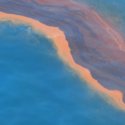
The lives tragically lost on April 20 2010, the loss experienced by their families, and the loss of others’ health and livelihoods will never be forgotten. Nine years after Deepwater Horizon, we reflect on the challenges and uncertainties that coastal residents and communities faced following the oil spill.
|
|
|
The Gulf of Mexico Research Initiative is pleased to announce a new Sea Grant product that concisely summarizes recent science regarding how dispersants work, how they are used, and how they affect sea life.
|
|
|
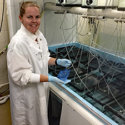
Following Deepwater Horizon, researchers have been conducting multi-year studies on the health of Gulf of Mexico marine life.
|
|
|
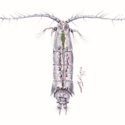
Scientists conducted laboratory experiments to investigate if copepod behavior can reshape the size frequency distribution of oil droplets.
|
|
|
Posted on April 27, 2018
Eight years after Deepwater Horizon, we reflect on the extraordinary establishment of the largest coordinated scientific endeavor around an ocean event – the Gulf of Mexico Research Initiative (GoMRI) – to understand, respond to, and mitigate impacts from this and future oil spills.
|
|
|
Posted on April 18, 2017
A team of scientists from the US and Mexico is studying the ocean floor near the site of the Ixtoc oil well blowout, in the hope of predicting the future health of marine life in the waters surrounding the 2010 Deepwater Horizon disaster.
|
|
|
Posted on April 20, 2016
Communicating oil spill research is essential to improve society’s understanding about spills and their ability to respond to and mitigate them. The Gulf of Mexico Research Initiative (GoMRI) has been funding spill-related research since 2010.
|
|
|
Study Finds Changes In Oil Composition During Marine Oil Snow Formation and Sedimentation
Partitioning of oil compounds into marine oil snow: Insights into prevailing mechanisms and dispersant effects. Wirth, M.A.; Passow, U.; Jeschek, J.; Hand, I.; Schulz-Bull, D.E. Marine Chemistry, Volume 206, 20 October 2018, Pages 62-73
Study Describes Ecosystem-Scale Methane Dynamics Following Deepwater Horizon
Long-term impact of the Deepwater Horizon oil well blowout on methane oxidation dynamics in the northern Gulf of Mexico. Rogener, M.K.; Hunter, K.S.; Bracco, A.; Saxton, M.; Joye, S.B. Elementa Science of the Anthropocene, 6(1), p.73.
|
|
Near-surface velocity 15-day seasonal and annual climatology for the eastern Gulf of Mexico from drifter observations from 1979 to 2015 -- data link
Dataset for: Behavioral consequences of dietary exposure to crude oil extracts in the Siamese fighting fish (Betta splendens) -- data link
Benthic infauna data from sediment cores collected aboard R/V Justo Sierra cruise JS-0815 in the southern Gulf of Mexico from 2015-08-03 to 2015-08-06 -- data link
|
|
May 1 GRIIDC Training Webinar: Submitting Cruise Data
This 30-minute webinar will provide information about the types of cruise data, supporting documentation, and file structure required for submission. The webinar is on Wednesday May 1st from 10:00 am - 10:30 am CDT / 11:00 am - 11:30 am EDT. Register here.
May 6-7 Final Events in Collaborative Workshop Series
The final two events in the series Regional Priority Setting for Health, Social, and Economic Disruption from Spills will be on May 6-7 Mobile, AL and May 7 (evening) Bayou La Batre, AL. These workshops focus on public health, social disruption, and economic impacts. Join scientists and emergency response personnel to learn about collaborations before, during, and after an oil spill. Register for either event here. More information and draft agendas are available here.
4 Synthesis Webinars in May! Core Area 7 Integrated / Linked Modeling System
GoMRI Synthesis Core Area 7B is developing a conceptual modeling framework that will synthesize new knowledge gained since Deepwater Horizon and set the foundation for a model that addresses broad stakeholder questions for future spills. The model will have to integrate natural and anthropogenic systems at various disciplines and scales. These webinars will gather information from the GoMRI research community. More details, including webinar links, are available here.
- May 6 10 - 11 am ET: Human Health. Moderator Helena Solo-Gabriele. Speakers: Alesia Ferguson Modeling Human Physical Health Risks; David Abramson A socio-ecological framework for health, well-being, and recovery in post-disaster settings; and Claire Paris-Limouzy Thinking Outside the Human Health Box: Possible Model Linkages.
- May 13 10 - 11 am ET: Ecosystems. Moderators Cam Ainsworth and Libby Fetherston-Resch. Speakers TBD.
- May 20 10 - 11 am ET: Socio-Economics: Moderator Katya Wowk. Speakers TBD.
- May 28 10 - 11 am ET: Physics: Moderators Cecelie Mauritzen and Eric Chassignet. Speakers TBD.
Now Available! GRIIDC Guidance on Marine/Environmental Chemistry Dataset Submission
Environmental/marine chemistry datasets come in various forms, such as measurements of particulates, dissolved organic carbon, proteins, polycyclic aromatic hydrocarbons, trace metals, nutrients, gasses, anions like sulfides, radioactivity, and other biomolecules in the water column and sediments. This GRIIDC-developed document provides information for successful submissions.
June 5 Deadline: $2.5 M for Gulf Research Program's Loop Current Studies
The Gulf Research Program invites the science community to submit grant applications for Fostering Innovation to Improve Understanding and Prediction of the Gulf of Mexico Loop Current System, which is part of the larger study Understanding Gulf Ocean Systems. The solicitation's focus is to support innovative theories, technologies, or methodologies that build upon the existing understanding of Loop Current System dynamics and help improve forecasting capabilities of the Loop Current and its associated eddies. Click here for more information.
|
|
CARMMHA Blog Describes How Satellites Track Dolphins
Consortium researchers safely captured, satellite-tagged, and released dolphins in Barataria Bay, LA, and Dauphin Island, AL, to assess their recovery from the Deepwater Horizon oil spill. These satellite tags are helping scientists understand dolphin movements and collect data about their health and movement patterns.
University of Miami Launches Oil Spill Research Web Page
The page features GoMRI-funded Deepwater Horizon research conducted at the university’s Rosenstiel School of Marine and Atmospheric Science, including impacts on fish and marine life and oil transport and fate.
DEEPEND and C-IMAGE Research Featured in USFSP Art Display
The University of South Florida St. Petersburg’s Nelson Poynter Library recently opened an art exhibit highlighting the Deepwater Horizon-related research of USF scientists. Among the featured pieces were twenty photographs of deep-sea organisms taken by DEEPEND co-PI Dante Fenolio San Antonio Zoo Department of Conservation and Research. DEEPEND and C-IMAGE scientists attended the opening to discuss current findings and answer questions about their research.
|
|
|
|
|
|
|