|
|
|
|
April 16, 2019 GoMRI eNews
|
|
The Research Board for the Gulf of Mexico Research Initiative (GoMRI) is encouraging its science community to submit abstracts for the 2020 International Oil Spill Conference (IOSC) by May 15, 2019.
|
|
|
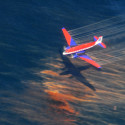
Researchers described, for the first time, the dynamics and interactions of regional ocean flows with both anticyclonic eddies (circulating clockwise) near Cuba’s northern coast (dubbed “CubANs”) and cyclonic eddies (circulating counter-clockwise) along Florida’s southern coast.
|
|
|
The National Academies of Science, Engineering, and Math released their evaluation findings that assessed the effects and efficacy of dispersants as an oil spill response tool.
|
|
|
Petroleum hydrocarbons buried in sandy beaches are protected from tides and UV light and, thus, may persist longer in the environment than oil on the beach surface.
|
|
|
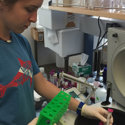
Scientists conducted mesocosm experiments with natural microbial communities to compare oil emulsion and dispersion mechanisms by microbial secretions of exopolymeric substances, EPS, also known as gels, and Corexit, a dispersant.
|
|
|
Posted on April 10, 2018
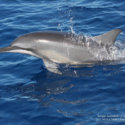
Researchers designed an automated network-based classification method to process large acoustic datasets and identify distinct dolphin click types without requiring prior knowledge of their distinguishing features. The method identified seven click types from over 50 million echolocation clicks recorded in the Gulf of Mexico – six clicks of unknown origin and one click belonging to the Risso’s dolphin species.
|
|
|
Study Compares Techniques Used in Oil Toxicity Tests
Passive dosing yields dissolved aqueous exposures of crude oil comparable to the CROSERF (Chemical Response to Oil Spill: Ecological Effects Research Forum) water accommodated fraction method: Comparison of water accommodated fraction preparations. Bera, G.; Parkerton, T.; Redman, A.; Turner, N.R.; Renegar, A.; Sericano, J.L.; Knap, A.H. Society of Environmental Toxicology and Chemistry Volume 37, Issue 11, November 2018, Pages 2810-2819
Study Determines Number of Bacteria that Adhere at Oil/Water Interfaces when DOSS present
Adhesion of Marinobacter hydrocarbonoclasticus to surfactant-decorated dodecane droplets. Dewangan, N.K. and Conrad, J.C. Langmuir 2018, 34, 46,14012-14021
|
|
Unmanned aerial vehicle images of Rhodamine WT dye releases as part of the Surfzone Coastal Oil Pathways Experiment (SCOPE), Okaloosa Island, Florida, 2013-12-13 to 2013-12-15 -- data link
Sediment-preserved diatom assemblage data from coastal marsh sediment cores collected in Terrebonne and Barataria Bays, Louisiana from 2016-05-07 to 2016-05-08 -- data link
Dataset for: Ecotoxicological benthic impacts of experimental oil-contaminated marine snow deposition -- data link
|
|
Collaborative Workshop Series: Regional Priority Setting for Health, Social, and Economic Disruption from Spills
A series of regional workshops is presented by the Gulf Research Program of the National Academies of Sciences, Engineering, and Medicine; the Gulf of Mexico Research Initiative; and various Sea Grant partners. The series focuses on public health, social disruption, and economic impacts. Join scientists and emergency response personnel as they come together and learn about collaborations before, during, and after an oil spill. See flyer here.
Smithsonian Ocean Portal has been nominated for a Webby Award for their recently redesigned website
The Webbys are an international award that honors excellence on the internet, and the Gulf of Mexico Research Initiative’s partner Smithsonian Ocean Portal is among five nominees in the general science category. Voting is open until Thursday, April 18 th. Vote here!
|
|
|
|
|
|
|