|
|
|
|
January 22, 2019 GoMRI eNews
|
|
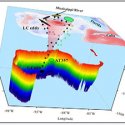
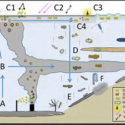
Scientists used 3D regional ocean model simulations and sediment trap data to investigate how large (mesoscale) and small (submesoscale) circulations affect the transport of sinking particles, or marine snow, in the northern Gulf of Mexico. Small-scale convergence and divergence processes (a few kilometers) and cross-shore transport of riverine inputs induced by mesoscale eddies significantly influenced the speed and trajectory of sinking particles in offshore waters.
|
|
|
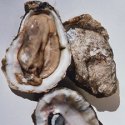
The Smithsonian’s Ocean Portal published an article that describes how oysters (that filter up to 50 gallons of water a day) fare under hazardous environmental conditions.
|
|
|
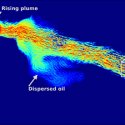
Scientists developed a modeling framework that includes small-scale fluid dynamics to investigate how dispersant application during Deepwater Horizon may have affected oil biodegradation and the environment.
|
|
|
The Gulf of Mexico Research initiative (GoMRI) congratulates Dr. Antonietta Quigg for her distinction of Regents Professor of Marine Biology and Oceanography at Texas A&M University.
|
|
|
Posted on January 16, 2018
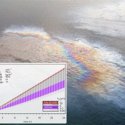
Researchers developed an algorithm that accounts for different wind speeds, oil types, natural dispersion processes (breaking waves), and chemical dispersant application to analyze oil slick evolution scenarios. The model results indicate how the oil slick will become thinner and dissipate over time as a result of dispersion.
|
|
|
Posted on January 19, 2017
Scientists conducting oil spill research participated in the 2013 Marine Oil Snow Sedimentation and Flocculent Accumulation (MOSSFA) workshop. The researchers discussed the formation and fate of oil-associated marine snow and its ecological impacts on deep-sea environments and made recommendations for future marine oil snow research.
|
|
|
Posted on January 26, 2016
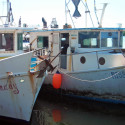
Authorities closed large portions of the Gulf of Mexico to commercial and recreational fishing following the Deepwater Horizon oil spill to contain and mitigate oil contamination of fish and seafood products. The fishing closures may have caused many fishers to search for alternative income solutions, such as relocating or chartering their vessels for the cleanup process.
|
|
|
Study Reveals Oceanographic Connectivity Pathways within Gulf of Mexico
Connectivity of Pulley Ridge with remote locations as inferred from satellite-tracked drifter trajectories. Olascoaga, M. J., Miron, P., Paris, C. B., Perez‐Brunius, P., Pérez‐Portela, R., Smith, R. H., & Vaz, A. C. (2018). Journal of Geophysical Research: Oceans, 123, 5742–5750
Study Provides Insights into Role of Oil Droplet Size on Microbial Biodegradation
Nutrient uptake by chemotactic microorganisms in presence of rising oil drops. Nikhil Desai, Sadegh Dabiri Arezoo M. Ardekani. International Journal of Multiphase Flow, Volume 108, November 2018, Pages 156-168
|
|
Sediment texture and composition of sediment cores collected during R/V Weatherbird II cruises in the northern Gulf of Mexico from 2010-11-18 to 2016-09-09 -- data link
Reef fish densities (per 1,000 m3) at natural reef sites estimated with remotely operated vehicle (ROV) video sampling in the northern Gulf of Mexico from 2015-08-30 to 2017-11-02 -- data link
Spectral variability of oil slicks under different observing conditions derived from satellite and airborne optical remote sensing -- data link
|
|
Now Available! 2018 Winter GoMRI Newsletter
Check out this issue which includes interviews with Dr. Tim Slack (CRGC), Dr. Eric Chassignet and Dr. Steve Moray (CSOMIO), and Dr. Lori Schwacke (CARMMHA).
Latest News for 2019 Gulf of Mexico Oil Spill and Ecosystem Science Conference
- Online Program. Search for sessions, workshops, and other events and build your personal schedule using the online planner.
- Session Schedule. A downloadable version is available here.
- Registration. Options now include a one-day workshop fee for those only attending a workshop ($75). The full registration fee covers all workshops and conference activities. Register for the conference here.
- RSVP for Monday workshops at the GoMOSES conference. A full list of workshops is available. Most request an RSVP, so check the sign-up instructions and reserve your space today.
- Registration Discounts. Attendees who stay at the Hyatt Regency (the conference venue) will receive a $100 discount on registration ($50 discount for students). When registering for the conference, enter your hotel confirmation number to receive the discount (applies only to Hyatt Regency not Hyatt House reservations). Make a reservation at the Hyatt Regency here.
Latest News for 2019 Sea Grant Workshops and Seminars
- Jan 24 Workshop: How Does Science Guide Oil Spill Response? Registration is now open for How does science guide oil spill response? Collaborating before, during and after a spill, a workshop scheduled in St. Petersburg, FL. The free event, also broadcasted via webinar, brings scientists and responders together to share what they know, discuss challenges, and brainstorm solutions. Register to attend in person. Instructions to attend online.
- Feb 20-22 Sea Grant Workshop on Regional Priority-Setting for Health, Social, and Economic Disruption from Spills. The next workshop in the collaborative series Regional priority-setting for health, social, and economic disruption from spills will be held in Anchorage, Alaska. Additional workshops are planned for California and Virginia in March and Alabama in April. Details here as they become available.
- Save the Date! Feb 28 Sea Grant Seminar Birds and Oil Spills. This free seminar will be on Feb 28 in Lacombe, LA. Details here as they become available.
|
|
|
|
|
|
|