|
|
|
|
January 8, 2019 GoMRI eNews
|
|
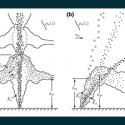
Researchers combined detailed observations, laboratory experiments, and existing numerical models to develop the Texas A&M Oil Spill (Outflow) Calculator (TAMOC) and improve predictions of subsea oil and gas plume dynamics.
|
|
|
Scientists developed a two-stage algorithm that identified the status of drogues attached to ocean drifters deployed during the Lagrangian Submesoscale Experiment (LASER).
|
|
|
Many fish that were exposed to Deepwater Horizon oil survived; however, they may have experienced later-in-life impacts that affected their ability to survive longer than fish that did not experience oil exposure.
|
|
|
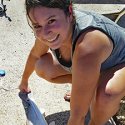
Researchers conducted mesocosm experiments that simulated beach ecosystems to assess if razor clams, which are bioturbators, can influence environmental conditions and the fate of polycyclic aromatic hydrocarbons (PAHs).
|
|
|
Posted on December 20, 2017
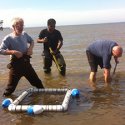
Alabama researchers measured the nitrogen removal capacity of marsh sediments and compared it to sediments from subtidal unvegetated mudflats, which are what the marsh becomes when it erodes.
|
|
|
Posted on December 20, 2016
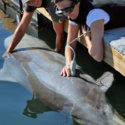
Concern about how the Deepwater Horizon oil spill may continue to negatively affect wild bottlenose dolphins living in the spill’s footprint remains high.
|
|
|
Posted on December 17, 2015
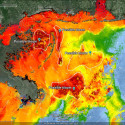
It’s a catchy name, but the common phrase “Red Tide” for the algal bloom happening right now in the northern Gulf of Mexico is not quite right, scientifically. The bloom is not always red and it’s not always related to tides.
|
|
|
Study Gives New Technique to Study Biofilm Formation at Oil-Water Interface
Fabrication and characterization of a scalable surface textured with pico-liter oil drops for mechanistic studies of bacteria-oil interactions. Jalali, M.; White, A.R.; Marti, J.; Sheng, J. Scientific Reports 2018 Volume 8, Article number 7612
Study is First to Investigate Relationship between Microbial Community, Oil, Corexit, and Marine Oil Snow
Rapid formation of microbe-oil aggregates and changes in community composition in coastal surface water following exposure to oil and the dispersant Corexit. Doyle, S.M.; Whitaker, E.A.; De Pascuale, V.; Wade, T.L.; Knap, A.H.; Santschi, P.H.; Quigg, A.; Sylvan, J.B. Frontiers in Microbiology April 2018 Volume 9 Article 689
|
|
Aging data of reef fish collected at natural reefs sites in the northern Gulf of Mexico from 2015-08-30 to 2017-11-03 -- data link
Constant energy synchronous fluorescence spectra (CESFS) of polycyclic aromatic hydrocarbons (PAHs) isomers -- data link
Dataset for: Adhesion of Marinobacter hydrocarbonoclasticus to Surfactant-Decorated Dodecane Droplets -- data link
|
|
Latest News for 2019 Gulf of Mexico Oil Spill and Ecosystem Science Conference
- Online Program. Search for sessions, workshops, and other events offered through the week using the online planner. You can build a personal schedule by bookmarking presentations of interest.
- Session Schedule. A downloadable version is available here. A more detailed schedule of presentations will be available as part of the online program.
- Registration. Options now include a one-day workshop fee for those only attending a workshop ($75). The full registration fee covers all workshops and conference activities. Register for the conference here.
- RSVP for Monday workshops at the GoMOSES conference. There are various topics from which to choose, from deep water oil spill response and trade-off decisions during response efforts to open ocean restoration and ecosystem assessment indicators. A full list of workshops is available. Most request an RSVP, so check the sign-up instructions and reserve your space today.
- Registration Discounts. Attendees who stay at the Hyatt Regency (the conference venue) will receive a $100 discount on registration ($50 discount for students). When registering for the conference, enter your hotel confirmation number to receive the discount (applies only to Hyatt Regency not Hyatt House reservations). Make a reservation at the Hyatt Regency here.
Latest News for 2019 Sea Grant Workshops and Seminars
- Jan 24 Workshop: How Does Science Guide Oil Spill Response? Registration is now open for How does science guide oil spill response? Collaborating before, during and after a spill, a workshop scheduled for Jan 24 in St. Petersburg, FL. The free event, also broadcasted via webinar, brings scientists and responders together to share what they know, discuss challenges, and brainstorm solutions. Register to attend in person. Instructions to attend online.
- 2nd Sea Grant Workshop on Regional Priority-Setting for Health, Social, and Economic Disruption from Spills. The next workshop in the collaborative series Regional priority-setting for health, social, and economic disruption from spills will be held Feb 20-21 in Anchorage, Alaska. Additional workshops are planned for California and Virginia in March and Alabama in April. Details here as they become available.
- Save the Date! Feb 28 Sea Grant Seminar Birds and Oil Spills. This free seminar will be on Feb 28 in Lacombe, LA. Details here as they become available.
|
|
CRGC PI Participates in Collaborative Workshop Series Kick-Off
Dr. Melissa Finucane presented her research on risk communication and participated in a panel discussion on Sharing Oil Spill Experiences and Insights. The workshop series (“Regional Priority Setting for Health, Social, And Economic Disruption from Spills”) focuses on public health, social disruption, and economic impacts in relation to oil spills and is presented by the Gulf Research Program (GRP) of the National Academies of Sciences, Engineering, and Medicine, GoMRI, and various Sea Grant partners.
CWC PI Featured on GulfCast Podcast
The episode hosts Dr. Nancy Rabalais of the Louisiana Universities Marine Consortium (LUMCON) as she discusses her team’s work researching blue crab recovery following the Deepwater Horizon oil spill.
|
|
|
|
|
|
|