|
|
|
|
November 13, 2018 GoMRI eNews
|
|
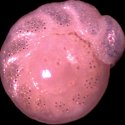
Researchers examined the isotopic composition of single-celled organisms (foraminifera) in seafloor sediment for evidence of the documented marine oil snow event that followed Deepwater Horizon.
|
|
|
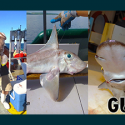
An international science team studying oil spill effects on marine ecosystems completed 12 research expeditions over seven years and produced the first fisheries-independent, multinational Gulf-wide fish survey.
|
|
|
Phytoplankton and bacteria in the northern Gulf of Mexico interact closely at the food web base and provide vital food and nutrients to marine life at higher trophic levels. During the Deepwater Horizon incident, these pervasive organisms played an important role in oil bioremediation before and after the application of chemical dispersants, which broke up surface slicks into smaller droplets and enhanced microbial degradation.
|
|
|
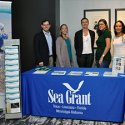
The Gulf of Mexico Research Initiative is pleased to announce that its partner Sea Grant and their Oil Spill Science Outreach Program received the National Superior Outreach Programming Award for synthesizing research results related to the Deepwater Horizon incident and engaging audiences who rely on healthy marine ecosystems to learn of their needs and share the latest science.
|
|
|
Posted on November 9, 2017
Researchers used population models to investigate how reduced survival and fertility after environmental disturbances, such as an oil spill, might affect sperm whale populations. Model simulations indicated that the magnitude of a disturbance had a stronger impact on recovery from lethal and sublethal effects than its duration.
|
|
|
Posted on November 10, 2016
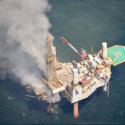
Research consortia involved in the GoMRI self-organized a rapid response to characterize the waters around the Hercules 265 rig. They found evidence of an immediate response from the surrounding environment’s microbial community to elevated methane concentrations.
|
|
|
Posted on November 3, 2015
Scientists studied the interactions of the oil-degrading bacterium Alcanivorax borkumensis with oil across oil-water interfaces that had varying amounts of different surfactants.
|
|
|
Study Describes Films of Bacteria at Air-Water, Oil-Water, and Water-Water Interfaces
Films of bacteria at interfaces. Vaccari, L.; Molaei, M.; Niepa, T.H.R.; Lee, D.; Leheny, R.L.; Stebe, K.J. Advances in Colloid and Interface Science, Volume 247, September 2017, Pages 561-572
Study Improves Understanding of River-Influenced Coastal Systems
Functioning of coastal river-dominated ecosystems and implications for oil spill response: From observations to mechanisms and models. Greer, A.; Shiller, A.; Hofmann, E.; Wiggert, J.; Warner, S.; Parra, S.; Pan, C.; Book, J.; Joung, D.J.; Dykstra, S.; Krause, J.; Dzwonkowski, B.; Soto, I.; Cambazoglu, K.; Deary, A.; Briseño-Avena, C.; Boyette, A.; Kastler, J.; Sanial, V.; Hode, L.; Nwankwo, U.; Chiaverano, L.; O'Brien, S.; Fitzpatrick, P.; Lau, Y.; Dinniman, M.; Martin, K.; Ho, P.; Mojzis, A.; Howden, S.; Hernandez, F.; Church, I.; Miles, T.; Sponaugle, S.; Moum, J.; Arnone, R.; Cowen, R.; Jacobs, G.; Schofield, O.; Graham, W. Oceanography, Volume 31, No. 3, Pages 90 - 103
|
|
Mathematical conversion of δ13C-CH4 for methane dissolved in water using raw data collected in the northern Gulf of Mexico, April 12-20, 2015 -- data link
Experiments to evaluate the impacts of acute exposure of PAHs on Gulf toadfish -- data link
DNA sequences of mitochondrial Cytochrome c oxidase I (COI) genes from deep sea fishes collected during DEEPEND cruise DP05 from 2017-05-01 to 2017-05-11 -- data link
|
|
Dec 4 Kick-Off for The National Academies/GoMRI/Sea Grant Collaborative Workshop Series
The series Regional priority setting for health, social, and economic disruption from spills will start with a two-day event in Houma, LA. The series takes a community approach to human-related aspects of oil spill preparedness, bringing together experts and area stakeholders to discuss public health needs before, during, and after an oil spill. Register here.
Tips for Sharing Science
The Sea Grant Oil Spill Science Outreach team offers presentation tips based on team ideas and snippets from the February 2018 science communication workshop.
Latest News for 2019 Gulf of Mexico Oil Spill and Ecosystem Science Conference
- Workshop Proposals. There is space available, on a first-come-first-served basis, for pre-conference workshops on Mon Feb 4. If you wish to organize a workshop, please submit the following to gulfconference@oceanleadership.org: workshop title, summary/description, organizer's name and affiliation, workshop duration (in hours), and estimated number of attendees.
- Registration Cost Changes. Options now include a one-day workshop fee for those only attending a workshop ($75). The full registration fee covers all workshops and conference activities ($500 for early registration on or before Nov 30, 2018; $250 for students). Register for the conference here.
- Registration Discounts. Attendees who stay at the Hyatt Regency (the conference venue) will receive a $100 discount on registration ($50 discount for students). When registering for the conference, you need to enter your hotel confirmation number to receive the discount. Make a reservation at the Hyatt Regency here. Reservations must be made at the Hyatt Regency to qualify for the discount. Although Hyatt House is connected to the Hyatt Regency, the parent company treats them as separate businesses and reservations made at Hyatt House are not included in the conference room block.
|
|
|
|
|
|
|