|
|
|
|
July 10, 2018 GoMRI eNews
|
|
Have you ever wondered how scientists ‘see’ under water? The Gulf of Mexico Research Initiative is pleased to announce a new Sea Grant publication about the technology scientists use to look at and study the deep ocean, specifically manned and unmanned vehicles.
|
|
|
The Gulf of Mexico is one of four “super-diverse” ecoregions in the world; yet, we don’t know much about how its deep environment changed after Deepwater Horizon because very little was known about it before the spill.
|
|
|
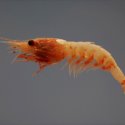
Researchers conducted 48-hour toxicity experiments on deep ocean crustaceans (200 – 1000 m depth) to determine the impact threshold levels for one polycyclic aromatic hydrocarbon (PAH, 1-methylnaphthalene) under various environmental conditions.
|
|
|
Posted on June 27, 2017
Scientists analyzed the carbon composition in Seaside Sparrow tissues to learn if oil from the 2010 spill was incorporated into the terrestrial food web. The researchers found reduced radiocarbon and stable carbon concentration levels in the feathers of birds captured at oiled sites compared with birds from non-oiled sites, which is consistent with a fossil oil source.
|
|
|
Posted on July 7, 2016
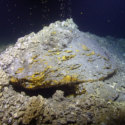
Scientists used stereoscopic high-speed, high-resolution cameras mounted on remotely operated vehicles (ROVs) to make fine-scale imaging and chemistry measurements inside and around gas bubbles rising from two natural Gulf of Mexico seeps.
|
|
|
Posted on July 9, 2015
Scientists measured the natural abundance of radiocarbon (14C) in sediments near the Deepwater Horizon spill site and estimated the location and amount of carbon derived from crude oil or gas.
|
|
|
Study Analyzes How Submesoscale Circulations Affect Lagrangian Statistics
Submesoscale dynamics in the northern Gulf of Mexico.Part III: Lagrangian implications. Choi, J.; Bracco, A.; Barkan, R.; Shchepetkin, A.F.; McWilliams, J.C.; Molemaker, J.M. Journal of Physical Oceanography, 47, 9, 2361-2376
Study Investigates Role of Sunlight on Marine Oil Snow Formation
The effects of sunlight on the composition of exopolymeric substances and subsequent aggregate formation during oil spills. Sun, L.; Chiu, M.-H.; Xu, C.; Lin, P.; Schwehr, K.A.; Bacosa, H.; Kamalanathan, M.; Quigg, A.; Chin, W.-C.; Santschi, P.H. Marine Chemistry, Volume 203, 20 June 2018, Pages 49-54
|
|
Large Eddy Simulations of Coastal Fog during LASER -- data link
Dataset for: Photochemical Oxidation of Oil Reduced the Effectiveness of Aerial Dispersants Applied in Response to the Deepwater Horizon Spill -- data link
Inventory of oceanic fauna data including species, weight, and measurements from R/V Point Sur (Cruise DP05) in the Gulf of Mexico from 2017-05-01 to 2017-05-11 -- data link
|
|
ADDOMEx Features Undergraduate Student Bergen
Charles Bergen is a junior at Texas A&M University at Galveston working with the ADDOMEx-2 project in Dr. Peter Santschi’s research lab. Read about his insights about how the protein-polysaccharide ratio in exopolymeric substances affects surface tension in the presence or absence of oil and/or Corexit here.
Video: CARTHE Shadowgraph Camera System in Action
The short clip depicts the release of oil and gas into a 200 m tank as the camera captures images in the upper right side of the screen. Researchers use these images to count and measure the size of particles under different flows and oil-gas ratios to better understand the evolution of an oil plume.
C-IMAGE’s The Loop Podcast Now Available on iTunes
The 11-part audio series describes how researchers investigate Gulf of Mexico mud, microbes, and mammals following the Deepwater Horizon oil spill. Episodes are available here on iTunes.
RECOVER Releases Third Installment of “Mini Mahi Tags” Video Series
The third episode “Behavior and Tags” documents the final stage of the research. Researchers affixed the mini tags to 8 mahi in a research tank with 8 untagged mahi to assess the tags’ impact on behaviors such as acceleration, average swimming speed, and proximity to other fish. Watch the video here!
|
|
|
|
|
|
|