|
|
|
|
April 17, 2018 GoMRI eNews
|
|
“Magical discovery moments” is how Dr. Samantha “Mandy” Joye describes scenes at the bottom of the ocean. Now, thanks to the BBC-produced documentary series Blue Planet II, we can get a glimpse of these discovery moments and join discussions about the ocean’s importance.
|
|
|
Researchers designed an automated network-based classification method to process large acoustic datasets and identify distinct dolphin click types without requiring prior knowledge of their distinguishing features. The method identified seven click types from over 50 million echolocation clicks recorded in the Gulf of Mexico – six clicks of unknown origin and one click belonging to the Risso’s dolphin species.
|
|
|
Natural seeps are abundant in the Gulf of Mexico and help create a chemically unique habitat where microbial populations can flourish. Andy Montgomery is researching the relationship between marine microbes and ocean chemistry and how chemical shifts affect the role microorganisms play in biogeochemical cycling, a common pathway for chemicals and organic matter to move through the ocean.
|
|
|
Nikaela Flournoy’s scientific journey has always carried a societal tie, from her passion for research’s social relevance to her realizations about the relationship between society and STEM (science, technology, engineering, and math). Though she is excited to see a greater emphasis on STEM in primary and secondary education, she hopes to help expand STEM awareness and curriculum to students from diverse educational and social backgrounds.
|
|
|
Posted on April 11, 2017
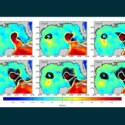
Researchers described in a recent study a surrogate-based technique to quantify the uncertainty in forecasting the oceanic circulation.
|
|
|
Posted on April 12, 2016
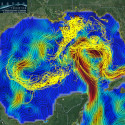
CARTHE conducts unprecedented experiment to improve oil fate models: Predictions for decisions – our world relies on them, from daily weather to annual financial forecasts. Predictions, though, are only as good as the information that goes into making them. And those predictions carry even more weight when they involve human safety in situations like storm tracking, search and rescue, and pollution monitoring.
|
|
|
Posted on April 7, 2015
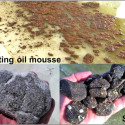
Auburn University scientists documented submerged oil mats and surface residual balls (also known as tar balls) on Alabama’s sandy beach systems and analyzed the physical and chemical evolution of compounds matching the characteristics of Macondo oil.
|
|
|
Study Finds Seaside Sparrows have Varying Responses to Marsh Ecosystem Disturbances
Seaside Sparrows reveal contrasting food web responses to large-scale stressors in coastal Louisiana salt marshes. Olin, J.A.; Bergeon Burns, C.M.; Woltmann, S.; Taylor, S.S.; Stouffer, P.C.; Bam, W.; Hooper-Bui, L.; Turner, R.E. Ecosphere, July 2017, Volume 8(7), Article e01878
Study Advances Knowledge of Nutrients for Oil Spill Response
The impact of dissolved inorganic nitrogen and phosphorus on responses of microbial plankton to the Texas City "Y" oil spill in Galveston Bay, Texas. Williams, A.K.; Bacosa, H.P.; Quigg, A. Marine Pollution Bulletin, Volume 121, Issues 1–2, 15 August 2017, Pages 32-44
|
|
Microbiome and bacterioplankton rRNA gene sequence data collected from Gulf of Mexico seawater samples, cruises DP03 and DP04 from April - August 2016 -- data link
Size-fractionated particulate organic matter and chlorophyll on the Mississippi-Alabama Shelf (2016) -- data link
Isotopic composition of particulates from sediment trap, northern Gulf of Mexico, August 25, 2010 - March 18, 2016 -- data link
|
|
CARMMHA to Co-Host Documentary Screening
The San Diego Natural History Museum will screen the film Dispatches from the Gulf on April 20 – the 8 th anniversary of the Deepwater Horizon incident. Following the screening, an expert panel will discuss the film and the research being conducted by CARMMHA to investigate how the spill impacted Gulf of Mexico marine mammals. Event information is available here.
CARTHE Short Film Selected as Ocean 180 Video Challenge Finalist
The short film “Drifting into the Gulf”, co-created by Waterlust, chronicles the design process for the drifters CARTHE uses to track ocean currents. Over 25,000 middle school students are evaluating the contest finalists to choose the winning videos.
CSOMIO Launches Facebook and Twitter Profiles
Like the consortium’s new Facebook page and follow their Twitter feed to keep up with their research and stay up-to-date on their latest activities.
ECOGIG Participates in 2018 Atlanta Science Festival
The Festival is an annual, week-long celebration of local science and technology. The researchers brought the Ocean Discovery Zone to the Festival's culminating event, The Exploration Expo, which included over 100 interactive exhibits, hands-on experiments, demos, and performances promoting science exploration and innovation.
RECOVER Releases Director’s Cut of Mahi-Mahi Tagging Expedition
The cut was created by former consortium outreach coordinator Dan DiNicola and highlights the group’s efforts to capture spawning, feeding, and migratory behaviors in wild mahi using PSAT tags.
|
|
|
|
|
|
|