|
|
|
|
April 3, 2018 GoMRI eNews
|
|
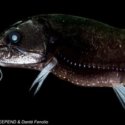
The deep-pelagic ecosystem was the largest habitat affected by the Deepwater Horizon incident, yet our limited knowledge about its fauna makes it difficult to compare their conditions before and after the spill. Researchers with the DEEPEND consortium are developing a quantitative, taxonomically comprehensive assessment of these deep-sea creatures to estimate their vulnerability and ability to recover from disturbances.
|
|
|
Researchers analyzed dissolved organic carbon from water column samples collected in five regions to establish baseline data about its relative persistence and cycling in the northern Gulf of Mexico. The team found that the Mississippi River exports large amounts of dissolved organic carbon with an anthropogenic 14C signature, which is removed and recycled offshore as the river plume moves offshore.
|
|
|
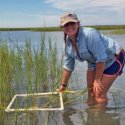
Major disturbances such as oil spills can significantly affect populations of vulnerable saltmarsh species, which may result in greater impacts to the overall saltmarsh food web. Shelby Ziegler believes that a better understanding of what saltmarsh predator-prey interactions look like today can help identify changes in the food web following disturbances in the future.
|
|
|
The Smithsonian’s Ocean Portal published an article about the diverse deep sea species found in the Gulf of Mexico following the Deepwater Horizon incident. The DEEPEND research consortium identified nearly 800 different species in Gulf waters, including 180 species not previously observed in the Gulf of Mexico region.
|
|
|
Posted on March 28, 2017
Deep-sea corals are important organisms that support a healthy and diverse deep-sea ecosystem. However, there is much we do not know about certain coral species, including how they grow, reproduce, or interact with other organisms.
|
|
|
Posted on March 29, 2016
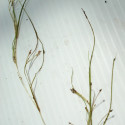
Scientists conducted experiments to assess oil exposure effects on Ruppa maritima, a common underwater plant species in Gulf of Mexico estuaries.
|
|
|
Posted on March 24, 2015
University of California Marine Science Institute researcher Uta Passow investigated the formation of aggregated oil and organic material, commonly called marine snow, after the Deepwater Horizon spill.
|
|
|
Study Suggests Homeostatic Mechanisms Offset Decreased Stroke Volume in Oil Exposed Fish
Cardio-respiratory function during exercise in the cobia, Rachycentron canadum: The impact of crude oil exposure. Nelson, D.; Stieglitz, J.D.; Cox, G.K.; Heuer, R.M.; Benetti, D.D.; Grosell, M.; Crossley II, D.A. Toxicology & Pharmacology, Volume 201, October 2017, Pages 58-65
Study Shows Particle Imaging System Can Measure Oil Droplets and Gas Bubbles
The use of wide-band transmittance imaging to size and classify suspended particulate matter in seawater. Davies, E.J.; Brandvik, P.J.; Leirvik, F.; Nepstad, R. Marine Pollution Bulletin, Volume 115, Issues 1–2, 15 February 2017, Pages 105-114
|
|
Biodegradation of gas and volatile hydrocarbons in seawater -- data link
Total petroleum hydrocarbons (TPH), polycyclic aromatic hydrocarbons (PAHs), and total organic carbon (TOC) data for uncontaminated beach sediment, St. George Island, Florida, June 6, 2010 -- data link
Unified Wave INterface Coupled Model (UWIN-CM) output from LASER -- data link
|
|
|
|
|
|
|