|
|
|
|
January 23, 2018 GoMRI eNews
|
|
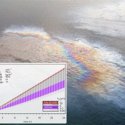
Researchers developed an algorithm that accounts for different wind speeds, oil types, natural dispersion processes (breaking waves), and chemical dispersant application to analyze oil slick evolution scenarios. The model results indicate how the oil slick will become thinner and dissipate over time as a result of dispersion.
|
|
|
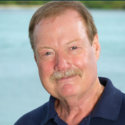
It is with deep sadness that we share the news that Dr. John Elliot Reynolds passed away on Saturday, December 23, 2017. One of Reynolds many roles was co-Principal Investigator with the Center for the Integrated Modeling and Analysis of Gulf Ecosystems (C-IMAGE) funded by the Gulf of Mexico Research Initiative (GoMRI) conducting marine life impact studies after the Deepwater Horizon incident.
|
|
|
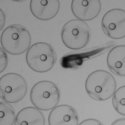
Researchers developed the first transcriptomic database for mahi-mahi embryos and larvae exposed to oil from the Deepwater Horizon incident. The team assembled over 60,000 transcripts, identified over 30,000 gene sequences, and observed 2,345 genes that differed significantly after exposure to weathered oil.
|
|
|
Kendal Leftwich conducts acoustic research assessing how northern Gulf of Mexico dolphin populations changed and recovered over time to help researchers better understand the health of dolphin species living in affected areas.
|
|
|
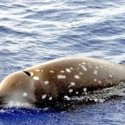
The Smithsonian recently published an article about how researchers are using sound or echolocation to learn more about the elusive beaked whale. Some of these whales live and forage in the vicinity where the Deepwater Horizon incident happened, and researchers are monitoring their numbers and location to learn how the oil spill may have affected their populations.
|
|
|
Posted on January 19, 2017
Scientists conducting oil spill research participated in the 2013 Marine Oil Snow Sedimentation and Flocculent Accumulation (MOSSFA) workshop. The researchers discussed the formation and fate of oil-associated marine snow and its ecological impacts on deep-sea environments and made recommendations for future marine oil snow research.
|
|
|
Posted on January 20, 2016
Scientists compared phytoplankton time-series data collected in Louisiana coastal waters after the Deepwater Horizon spill. They found that phytoplankton abundance was significantly lower in 2010 and that the community’s species composition significantly shifted immediately after the spill.
|
|
|
Study Uses New Network-Based Classification Method to Identify Distinct Dolphin Clicks
Automated classification of dolphin echolocation click types from the Gulf of Mexico. Frasier, K.E.; Roch, M.A.; Soldevilla, M.S.; Wiggins, S.M.; Garrison, L.P.; Hildebrand, J.A.; Glotin, H. PLOS Computational Biology, l 13(12): e1005823, December 7, 2017
Study Shows Oil Exposure Reduces Cardiac Function in Adult Mahi-Mahi
Effects of crude oil on in situ cardiac function in young adult mahi-mahi (Coryphaena hippurus). Nelson, D.; Heuer, R.M.; Cox, G.K.; Stieglitz, J.D.; Hoenig, R.; Mager, E.M.; Benetti, D.D.; Grosell, M.; Crossley II, D.A. Aquatic Toxicology, Volume 180, November 2016, Pages 274-281
|
|
2017 Community Health Worker Evaluation Retreat -- data link
Time-course mRNA sequencing on red drum (Sciaenops ocellatus) embryos exposed to slick oil -- data link
Dataset for: Point force singularities outside a drop covered with an incompressible surfactant: Image systems and their applications -- data link
|
|
Update! Deadline Extended to Feb 16 Abstract Submission ASLO Special Session "Oil and Water Do Mix"
Drs. Ed Buskey and Ken Lee are chairing a special session at the Association for the Sciences of Limnology and Oceanography (ASLO) 2018 Summer meeting, June 10-15, 2018, Victoria, B.C., Canada. They invite researchers to submit abstracts for their session titled: Oil and water do mix: The fate, behavior, and impact of dispersed oil droplets in the sea. Read about the session here. Read an overview of submission requirements here.
2018 GoMOSES Program Available Online
Search sessions, workshops, and other events and build a personal schedule by bookmarking presentations of interest. Click on "Log In" and set up profile. This will also allow you to access your schedule through the mobile app (coming soon). Just want to check out the schedule? Click and go; no log-in required.
Position Open for MS-AL Sea Grant Oil Spill Science Extension Specialist
Join a diverse, dynamic team that serves as a bridge between oil spill science and application by synthesizing and sharing science with various audiences.
Sea Grant Seminar Feb 5, 2018: Sharing Science Effectively
This free workshop "Know your audience and speak their language" will provide scientists with techniques for communicating research and results to various audiences. Although held at the Hyatt Regency Hotel in New Orleans, LA where the Gulf of Mexico Oil Spill & Ecosystem Science Conference will be, attendees do not need to register for the larger conference to join our workshop. Register here. View the flyer here.
|
|
CWC Announces LEAD Camp
High school students will have the opportunity to explore Louisiana’s coastal environments as
Scientists through LUMCON’s world-class research vessels, oceanographic equipment, laboratories, and science staff. The camp will take place June 17 – 23 at the DeFelice Marine Center in Cocodrie, LA. Additional information, including application details, is available here.
DEEPEND Releases New Teaching Module
The new module Nature in Science targets grades 6-12 and utilizes consortium research data to clearly describe the scientific method, including what is science, how is science conducted, and how is science communicated. The full 45-page module is available for download from the DEEPEND website.
ECOGIG PI Featured on GulfCast Podcast
Dr. Mandy Joye recently appeared on the show to discuss her research on the ocean’s microbial “worker bees,” which carry out critical processes that keep the ocean healthy, and their reaction to the Deepwater Horizon oil spill.
|
|
|
|
|
|
|