GoMRI eNews · Jan 9, 2018 · ← All issues
Welcome to the GoMRI eNews.

Keeping you current on emerging Gulf science and the people investigating the effects of oil spills on the environment and public health.

January 9, 2018                                                                    GoMRI eNews

Stories

Jewels of the Gulf: Deep-sea Coral Educational Video Series

Study Estimates Reduced Nitrogen Removal Capacity in Marshes with Vegetation Loss

Grad Student Hoover Examines How Freshwater Discharge Affects Gulf Larval Fish

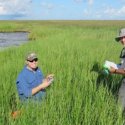
Study Uses Fiddler Crabs and Periwinkle Snails to Monitor Long-Term Marsh Health after Oil Spill

Grad Student Snider Examines Seaside Sparrows Diet for Food Web Impacts from Oiling

From the Archives

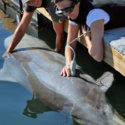
Investigating Louisiana Dolphins’ Reproductive Health After Deepwater Horizon

Posted on December 20, 2016
Concern about how the Deepwater Horizon oil spill may continue to negatively affect wild bottlenose dolphins living in the spill’s footprint remains high.

How Scientists are Monitoring the Harmful Algal Bloom

Posted on December 17, 2015
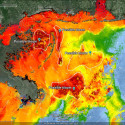
It’s a catchy name, but the common phrase “Red Tide” for the algal bloom happening right now in the northern Gulf of Mexico is not quite right, scientifically. The bloom is not always red and it’s not always related to tides.

Publications

Study Presents Modeling Approach for Surface Oil Slick Development
Predicting the consequence of natural and chemical dispersion for oil slick size over time. Zeinstra-Helfrich, M.; Koops, W.; Murk, A.J. Journal of Geophysical Research, Oceans, Volume 122, Issue 9 September 2017, Pages 7312–7324

Study Presents a New Global Drifter-Based Climatology of Near-Surface Currents 
An improved near-surface velocity climatology for the global ocean from drifter observations. Laurindo, L.C.; Mariano, A.J.; Lumpkin, R. Deepsea Research Part 1: Oceanographic Research Papers, Volume 124, June 2017, Pages 73-92

Data

Films of Bacteria at Interfaces - biological consequences of their presence to mechanical properties -- data link

4.2K Phosphorescence Lifetimes of Polycyclic Aromatic Sulfur Heterocycles with Molecular Weight 234 -- data link

BIONESS profile and plankton sample collection data, cruise PTS03, northern Gulf of Mexico, July 2016 -- data link

Announcements

Deadline February 9 Abstract Submission ASLO Special Session "Oil and Water Do Mix" 
Drs. Ed Buskey and Ken Lee are chairing a special session at the Association for the Sciences of Limnology and Oceanography (ASLO) 2018 Summer meeting, June 10-15, 2018, Victoria, B.C., Canada. They invite researchers to submit abstracts for their session titled: Oil and water do mix: The fate, behavior, and impact of dispersed oil droplets in the sea. Read about the session here. Read an overview of submission requirements here.

Sea Grant Seminar February 5, 2018: Sharing science effectively: Know your audience and speak their language
This free workshop will provide scientists with techniques for communicating research and results to various audiences. Although held at the Hyatt Regency Hotel in New Orleans, LA where the Gulf of Mexico Oil Spill & Ecosystem Science Conference will be, attendees do not need to register for the larger conference to join our workshop. Register here.  View the flyer here.

Project Activities

CARTHE Partners with Biscayne National Park for BayDrift Project
Park personnel released drift cards at the southern end of Biscayne Bay at the center of the National Park. Check out this video to see how they are working with CARTHE and other institutions involved in the BayDrift experiment to investigate how currents transport trash.
 
CWC Announces 2018 Art & Science Camp
Students entering the 8th – 12th grades will learn about coastal Louisiana ecosystems through hands-on field-based activities and translate their experiences into works of art. The camp will take place June 3 – 9 at the DeFelice Marine Center in Cocodrie, LA. Additional information, including application details, is available here.
 
High School Intern Joins DROPPS Lab
Texas high school senior Helen Schawe works in Dr. Jian Sheng’s lab at Texas A&M University – Corpus Christi researching how dispersants influence bacterial growth and oil degradation. She began working with the team as a summer project and utilizes her free time after school and between swim practices to continue her research into the school year. Learn more about Helen’s research and background!