|
|
|
|
December 12, 2017 GoMRI eNews
|
|
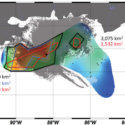
Researchers used naturally occurring radioisotopes to quantify the footprint of sedimented marine oil snow on the Gulf of Mexico seafloor following the Deepwater Horizon incident.
|
|
|
The Gulf of Mexico Research Initiative (GoMRI) is pleased to announce a new Sea Grant publication that addresses the public’s questions about health safety after the Deepwater Horizon incident. The fact sheet, Is it Safe? Examining Health Risks from the Deepwater Horizon Oil Spill succinctly explains findings from peer-reviewed studies and reports from state and federal agencies that investigated the safety of the beach, water, and seafood since the spill.
|
|
|
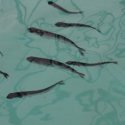
The Smithsonian recently published an article that included research, funded by the Gulf of Mexico Research Initiative (GoMRI), that investigated the behavior of fish larvae around oil. The referenced study is of particular interest because the amount of oil used in exposure experiments were at levels recorded in industrialized sections of tropical coral reefs worldwide.
|
|
|
Posted on December 8, 2016
Major environmental disturbances such as oil spills can alter a marine ecosystem’s structure and even cause species losses or additions in impacted areas – changes which may have long-term consequences for an ecosystem’s functions.
|
|
|
Posted on December 1, 2015
Scientists from Brown University and the University of Rhode Island investigated how Alcanivorax borkumensis, a dominate bacterium in marine environments that contain high hydrocarbon levels, can be supported to naturally degrade oil.
|
|
|
Posted on December 3, 2014
Can watching ants really contribute to understanding an oil spill? Yes, it can! Ants have acted as indicators of environmental change in the past.
|
|
|
Study Examines Role of Mississippi–Atchafalaya River System in Driving Submesoscale Currents: Winter and Summer
Submesoscale Dynamics in the Northern Gulf of Mexico. Part I: Regional and Seasonal Characterization and the Role of River Outflow. Barkan, R.; McWilliams, J.C.; Shchepetkin, A.F.; Molemaker, M.J.; Renault, L.; Bracco, A.; Choi, J. Journal of Physical Oceanography, Volume 47 No. 9, September 2017, 2325–2346
Study Examines Role of Mississippi–Atchafalaya River System in Driving Submesoscale Currents: Temperature and Salinity
Submesoscale Dynamics in the Northern Gulf of Mexico. Part II: Temperature-Salinity Relations and Cross-Shelf Transport Processes. Barkan, R.; McWilliams, J.C.; Molemaker, M.J.; Choi, J.; Srinivasan, K.; Shchepetkin, A.F.; Bracco, A. Journal of Physical Oceanography, Volume 47 No. 9, September 2017, 2347–2360
|
|
Combined effects of oil exposure, temperature and UV-radiation on buoyancy and oxygen consumption of embryonic mahi-mahi, Coryphaena hippurus -- data link
Complete bacterial symbiont genome sequences from anglerfish Cryptopsaras couesii and Melanocetus johnsonii -- data link
Ramped Pyrolysis - Gas Chromatography - Mass Spectrometry of weathered Deepwater Horizon oil, Grand Isle and Barataria Bay, Louisiana, 2010-2012 -- data link
|
|
|
RFP IV Update: Effects of Cardiac Outcomes in Fish for Validation of Ecological Risk (Grosell) - RECOVER is an integration of studies at the molecular, cellular, organ level and whole animal physiology as well as behavioral studies at different life stages for two important Gulf of Mexico predatory fishes, the coastal redfish and the pelagic mahi-mahi.
|
|
|
|
|
|
|
|