|
|
|
|
November 14, 2017 GoMRI eNews
|
|
Researchers used population models to investigate how reduced survival and fertility after environmental disturbances, such as an oil spill, might affect sperm whale populations. Model simulations indicated that the magnitude of a disturbance had a stronger impact on recovery from lethal and sublethal effects than its duration.
|
|
|
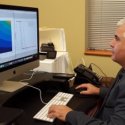
Crude oil contains tens of thousands of hydrocarbons, including polycyclic aromatic hydrocarbons (PAHs) that create unique chemical fingerprints for different types of oil. Dawei “David” Shi uses geochemical analysis techniques in mesocosm studies to track these fingerprints.
|
|
|
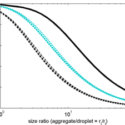
Researchers analyzed simulated interactions of oil droplets and marine particle aggregates to understand how they could affect the behavior of an oil spill. The scientists found that the attachment of oil droplets to particle aggregates changed the distribution of oil droplet sizes over time scales of hours.
|
|
|
The Gulf of Mexico Research Initiative congratulates its Research Board Chair Dr. Rita Colwell on her selection as the 33rd laureate of the International Prize for Biology. The prize, managed by the Japan Society for the Promotion of Science, honors outstanding contributions to research advances in fundamental biology and is one of the most prestigious honors a natural scientist can receive.
|
|
|
Posted on November 8, 2016
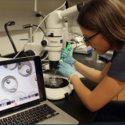
Studies that investigate the effects of oil exposure on developing fish are typically conducted at otherwise non-stressful ambient conditions, which may result in conservative impact estimates. Christina Pasparakis is studying the combined effects of oil exposure and other environmental stressors to create a more comprehensive assessment of Deepwater Horizon impacts.
|
|
|
Posted on November 3, 2015
Scientists studied the interactions of the oil-degrading bacterium Alcanivorax borkumensis with oil across oil-water interfaces that had varying amounts of different surfactants.
|
|
|
Posted on November 7, 2014
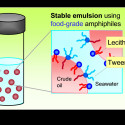
Scientists from the University of Maryland and Tulane University investigated the possibility of using food-grade materials for oil spill remediation.
|
|
|
Study Estimates a Decade or More Recovery for Infauna at Oiled Louisiana Sites
Recovery of saltmarsh meiofauna six years after the Deepwater Horizon oil spill. Fleeger, J.W.; Riggio, M.R.; Mendelssohn, I.A.; Lin, Q.; Hou, A.; Deis, D.R. Journal of Experimental Marine Biology and Ecology, 10 August 2017, ISSN 0022-0981
Study Develops and Tests New Formulation of Gas-Oil Interaction in Subsea Blowouts
Droplet and bubble formation of combined oil and gas releases in subsea blowouts. Zhao, L.; Boufadel, M.C.; King, T.; Robinson, B.; Gao, F.; Socolofsky, S.A.; Lee, K. Marine Pollution Bulletin, Volume 120, Issues 1–2, 15 July 2017, Pages 203-216
|
|
Cruise data for neuston net and paired bongo net tows from 47 stations in the northern Gulf of Mexico from R/V Pelican cruise LF2017A July 2017 -- data link
R/V Endeavor: EN600 Acoustic Doppler Current Profiler (ADCP) data, Gulf of Mexico, June 02-26, 2017 -- data link
In vivo cardiac function during swimming in juvenile cobia (Rachycentron canadum) following crude oil exposure -- data link
|
|
|
RFP IV Update: Ecosystem Impacts of Oil and Gas Inputs to the Gulf-2 - ECOGIG-2 (Joye) - The ECOGIG-2 (Ecosystem Impacts of Oil and Gas Inputs to the Gulf - 2) Research Consortium conducts multi-scale, multidisciplinary research to study the impacts and fates of oil and gas released in offshore waters of the Gulf of Mexico.
|
|
|
ACER Fact Sheet Highlights Microplankton Group
The microplankton research group examines how the planktonic community changes in the presence of petrochemicals and how those changes may affect their daily activity and their role in the food web.
CARTHE Reports First Drift Card Found
A drift card used in the program’s Bay Drift project was found in Virginia Key just half an hour after being released from the University of Miami's Rosenstiel School of Marine & Atmospheric Science dock. The Bay Drift Project is a citizen-science experiment that uses drift cards to help determine how materials travel through the Gulf of Mexico.
CRGC Director Emphasizes Resilience as Key to Post-Hurricane Recovery
Following the active 2017 Atlantic hurricane season, Project Director Dr. Melissa Finucane discussed the ability of communities whose infrastructure is repeatedly threatened to withstand major storms. She suggests that a comprehensive, science-based analysis of a community’s resilience needs can help determine disaster-recovery priorities for long-term rebuilding efforts.
DEEPEND Masters Student Discusses Juvenile Gulf of Mexico Fish
Graduate student Sebastian Velez introduced his work studying juvenile snappers and groupers in a recent DEEPEND blog post. He focuses on what happens to these organisms when they drift off the continental shelf to areas with depths up to 1500 meters.
ECOGIG Video Highlights Coral Research
The second episode in the consortium’s three-part deep-sea coral series uses footage from the group’s Jewels of the Gulf expedition to show how scientists use remotely operated vehicles and high-resolution camera equipment to study deep-sea Gulf of Mexico ecosystems.
Video: RECOVER Scientist Explains How Researchers Raise Mahi-Mahi
Dr. John Stieglitz discusses how scientists raise mahi-mahi in the University of Miami’s Experimental Fish Hatchery in an effort to better understand how the Deepwater Horizon incident affected them.
|
|
|
|
|
|
|