|
|
|
|
June 13, 2017 GoMRI eNews
|
|
A 12-day science expedition on the exploration vessel Ocean Intervention II embarks June 11 to investigate how oil, gas, and chemical dispersants affect marine life and their environment deep in the Gulf of Mexico. Scientists and outreach personnel onboard the vessel will interact with the public and school-age children using streaming video, social media, and question-and-answer sessions.
|
|
|
Trust in scientific findings is especially important when the research relates to your livelihood and health as it did for commercial and recreational fishing communities after the Deepwater Horizon oil spill. Many scientists conducting early studies on the spill believed that they were considered trustworthy, like firemen and policemen. However, it became apparent as the spill unfolded that the relationship of the public, science, and trust was complex and sometimes on shaky ground.
|
|
|
Scientists conducted genetic sequencing on bacteria to document the oil-associated groups in sediment affected by marine oil snow post-Deepwater Horizon. The researchers observed increases in bacteria that degrade aerobic Polycyclic Aromatic Hydrocarbons (PAHs) and anaerobic sulfate-reducing bacteria in sediment collected from September-November 2010.
|
|
|
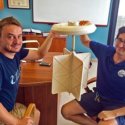
The Deepwater Horizon event highlighted the need for more economical and ecofriendly methods to accurately track and study ocean currents. Scientists with the Consortium for Advanced Research on Transport of Hydrocarbon in the Environment II (CARTHE II) spent two years testing different structures and materials to develop a practical, cost-efficient, and biodegradable drifter design.
|
|
|
Posted on May 31, 2016
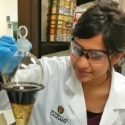
As a child in India, Aprami Jaggi witnessed firsthand how polluted water sources impact society. Her desire to make water remediation her life’s work has led her from Delhi to Calgary, Canada, to study oil mitigation.
|
|
|
Posted on June 9, 2015
Scientists from Haverford College examined Gulf of Mexico sediment and flocculent material (floc) associated with oil-impacted corals to study indigenous microbial communities and their oil degradation potential.
|
|
|
Posted on June 9, 2014
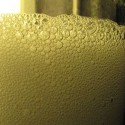
Scientists from Louisiana State University evaluated bursting bubbles as a pathway for hydrocarbons to move from the sea into the air and they investigated the influence of Corexit 9500A on this process.
|
|
|
Exposure to ultraviolet radiation late in development increases the toxicity of oil to mahi-mahi (Coryphaena hippurus) embryos. Sweet, L.E.; Magnuson, J.; Garner, T.R.; Alloy, M.M.; Stieglitz, J.D.; Benetti, D.; Grosell, M.; Roberts, A.P. Environmental Toxicology and Chemistry, online December 2016, SN 1552-8618.
|
|
In Situ Ichthyoplankton Imaging System (ISIIS) lobster phyllosoma and zooplankton images and associated oceanographic data from Fall of 2015 -- data link
Videos for Injury and recovery of respiratory performance and swimming performance of red drum following acute oil exposure -- data link
Marsh plants and soil data, northern Barataria Bay, May 2016 to December 2016 -- data link
|
|
|
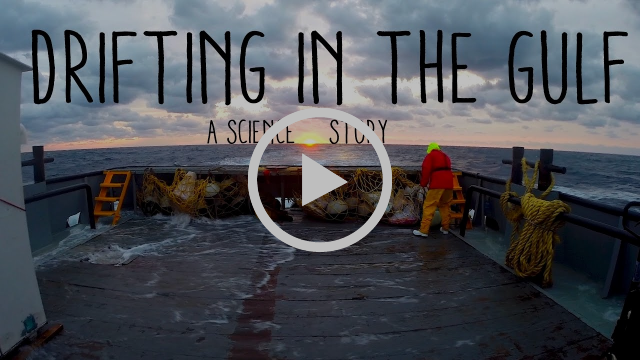
Drifting in the Gulf - A Science Story (Waterlust) -- After the Deepwater Horizon oil spill in 2010, ocean scientists from around the world came together to study the currents in the Gulf of Mexico in new ways. After designing a new bio-degradable GPS drifter, they performed the largest ocean drifter experiment in history.
|
|
|
Dispatches From the Gulf Wins 1st Place at IOSC Film Festival
As part of its week-long program, the 2017 International Oil Spill Conference hosted a film festival. Dr. Chuck Wilson accepted the first place award on behalf of Screenscope Films and Dispatches creators Marilyn & Hal Weiner.
|
|
Short ADDOMEx Clip Features Clever Device for Water Oxygenation
Dr. Tony Knap’s device can oxygenate a water tank by diffusing oxygen into the water column, preventing air bubbles from disrupting bacterial aggregates.
CARTHE and NASA Team Up for Radar Validation
The NASA Jet Propulsion Laboratory (JPL) DopplerScat radar is able to measure both ocean currents and wind, which influence the transport of materials in the ocean. JPL members joined CARTHE’s recent SPLASH experiment to validate the radar and expressed a desire to coordinate data exchange with CARTHE in the future.
Meet C-IMAGE Student of the Month Melissa Rohal
Melissa is a Ph.D. student at Texas A&M – Corpus Christi’s Harte Institute. She is investigating the effects of oil spills on the deep-sea ecosystem services that meio- and macro-fauna provide. Learn more about her journey and research here.
CRGC Releases Database of Oil Spill Claim Sources
The new resource uses a variety of potential sources, such as the U.S. Census Bureau, to help businesses, researchers, community members, and other stakeholders locate information about fisheries, tourism, and oil spill claims. The database is intended to introduce users to information sources that may be less widely known than standard economic activity databases.
DEEPEND Outreach Video Highlights Cephalopods
Watch as consortium outreach mascot Squirt introduces kids to different cephalopod species found in the Gulf of Mexico. Check out the video here!
ECOGIG Scientists Embark on “Jewels of the Gulf” Research Cruise
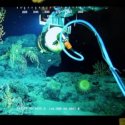
The 12-day expedition will assess the effects of oil, methane, and chemical dispersants on deep-sea corals. Remotely operated vehicles at over 1000 meters depth will capture hundreds of high-resolution still images of corals that the researchers have been monitoring since 2010. The team will analyze the images and compare them to those from previous expeditions to document the spill’s impacts and assess the coral’s post-spill recovery and survival.
|
|
|
|
|
|
|