GoMRI eNews · May 16, 2017 · ← All issues
Welcome to the GoMRI eNews.

Keeping you current on emerging Gulf science and the people investigating the effects of oil spills on the environment and public health.

May 16, 2017                                                                    GoMRI eNews

Stories

Studies Highlight Complexities in Connecting Larval Fish Health to Deepwater Horizon

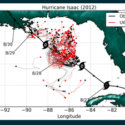
Study Investigates Influence of Hurricanes on Ocean Surface Currents

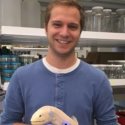
Grad Student Novotny Searches for Oil Transport Pathways in Deep-Sea Fish Stomachs

Jeff Chanton Honored with Highest Award for FSU Faculty

From the Archives

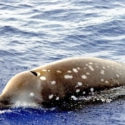
Study Estimates Beaked Whale Populations in Gulf of Mexico

Posted on May 3, 2016
Scientists used passive acoustic monitoring during 2010-2013 to detect the presence of beaked whales in the Gulf of Mexico. These animals are difficult to study visually because they spend little time at the sea surface and are only present in offshore deep waters; they are rarely found on the continental shelf and near-shore waters.

Grad Student Johansen Counts Bubbles to Understand Natural Oil Seeps

Posted on May 12, 2015
Caroline Johansen laughs when her family tells others that her research involves counting bubbles. But the bubbles she studies come from seeps at the bottom of the Gulf and contain naturally-occurring hydrocarbons that are an important part of the deep-sea ecosystem.

Seafloor Rescue – Universities Collaborate for Amazing Recovery of Downed AUV

Posted on May 14, 2014
The Mola Mola, one of only six SeaBED class Autonomous Underwater Vehicles (AUVs) in the world will be in the Gulf of Mexico later this month as scientists survey the sea floor near the Macondo wellhead.

Publications

Study Identifies Marsh Species Response to Oil Spill 
Key taxa in food web responses to stressors: the Deepwater Horizon oil spill. McCann, M.J.; Able, K.W.; Christian, R.R.; Fodrie, F.J.; Jensen, O.P.; Johnson, J.J.; Lopez-Duarte, P.C.; Martin, C.W.; Olin, J.A.; Polito, M.J.; Roberts, B.J.; Ziegler, S.L.  Frontiers in Ecology and the Environment, Volume 15, Issue 3, April 2017, Pages 142–149

Laboratory Study Demonstrates the Effect of Sub-Sea Dispersant on Oil Plume 
Crude oil jets in crossflow: Effects of dispersant concentration on plume behavior. Murphy, D.W.; Xue, X.; Sampath, K.; Katz, J. Journal of Geophysical Research, Oceans, Volume 121, Issue 6, June 2016, Pages 4264–4281

Data

Oil Composition and nutrients for the COAST mesocosm study, COASTal water with added coastal microbial concentrate -- data link

Molecular characterization of benthic foraminifera communities from the Northeastern Gulf of Mexico shelf and slope following the Deepwater Horizon event, 2012-2013 -- data link

Field data supporting study of temporal changes in microbial diversity from Louisiana marsh sediment, May 2015 -- data link

Video

Encouraging Women in Science: Meet Samantha Joye (Dispatches from the Gulf)

Encouraging Women in Science: Meet Samantha Joye (Dispatches from the Gulf) -- Professor Samantha “Mandy” Joye (University of Georgia) shares her personal journey through science – from her childhood passion for the ocean – her decision to forgo medical school – earning a Ph.D. from a program with no women faculty – and how she tirelessly instills determination in young women interested in science.

Announcements

Topics will include regional transportation, economics, hazards and risk, emergency response, and lessons learned from the Gulf of Mexico. The symposium will facilitate improved understanding about the complexity of crude oil movement in the Great Lakes-St. Lawrence River Basin and other northern watersheds including Lake Champlain and the Hudson River. A webcast will be available. More information: Flyer, Agenda, and Registration.

Project Activities

ACER Welcomes Post-Doc Kelly Boyle
Boyle joined the project’s Oyster Reef group to investigate the oyster reefs’ resilience to the Deepwater Horizon oil spill. He will lead a large mesocosm experiment at the Dauphin Island Sea Lab investigating how oyster reef communities respond when exposed to oil, dispersant, and changes in salinity.
 
CARTHE Research Featured at Frost Museum
An interactive display at the newly opened Philip and Patricia Frost Museum of Science features a variety of tagging and tracking research projects including the consortium’s Bay Drift study. Visitors can use the exhibit to select the topic they want to explore, meet the scientists involved, see the study’s method and results, and see real CARTHE drifter tracks within Biscayne Bay.
 
C-IMAGE Launches Interactive Oil Website
The site compares the 1979 Ixtoc I spill and the 2010 Deepwater Horizon oil spill through maps, video interviews, and podcasts and highlights the lasting environmental, economic, and personal impacts of Gulf of Mexico mega-spills.
 
CRGC Launches Improved Resources Page
The page now offers visitors an easy-to-navigate search function that allows them to explore CRGC-generated and external resources tailored for audiences of academics, community leaders, fishing/seafood industry stakeholders, healthcare providers, and policymakers. The page will continue to expand as new research findings become available and additional tools and resources are developed.
 
CWC Plans 2017 Science Summer Camps
There is still time to register for the LUMCON Estuarine Awareness and Discovery (LEAD) Camp and Field Marine Science (FMS) Research Camp. The LEAD Camp introduces coastal and marine environments using hands-on, science-based discovery, while the FMS Camp helps students gain practical and real world experience conducting and communicating research. Register for the LEAD Camp here (deadline June 5) and the FMS camp here (deadline June 15).
 
DEEPEND Logs DP05 Cruise Through Kids Blog
Following a short weather delay, the consortium kicked off its fifth research cruise, a two-week survey of Gulf of Mexico. The DEEPEND team has been posting updates on their progress to the project’s Kids Blog almost daily. Visit the blog to catch up on the latest news.
 
ECOGIG Participates in Philadephia Science Carnival
Consortium researchers used the Ocean Discovery Zone, an all-ages exhibit booth and hands-on activity station, to share their deepsea coral research with science-interested visitors. The booth includes a deep-sea coral Build*Draw*Learn station, a simulated natural gas seep, and a model ROV activity.
 
RECOVER Attends Ocean Kids Event
Researchers set up a booth at the Virginia Key Park event to give Miami kids a firsthand experience with their science and research. Photos from the event are available here!