LADC-GEMM Hosts SeaGlide Educator Workshop
Twenty elementary through high school teachers learned how gliders are used to conduct consortium research and built their own working sea gliders. High school students from Toledo, Oregon, presented their own simple versions of the gliders and their analysis of real glider field data to demonstrate how lesson plans can be developed around the hands-on activity.
CWC Conducts “Slice ‘n Dice” Coring Expedition
Researchers collected sediment cores from Terrebonne Bay marshes to investigate historical trends in phytoplankton composition and hydrocarbon remnants. Three of the six recovered cores were sliced ‘n diced into 1-cm increments that will be analyzed for evidence of chronic oil release, the
Deepwater Horizon oil spill, and other identified factors.
RECOVER Attends Turtlefest 2016
Consortium representatives discussed the project’s research with attendees and offered a fishing trivia game for children that involved “catching” mahi cards printed with trivia questions. Over 10,000 people attend Turtlefest each year to participate in conservation activities including turtle encounters, art, educational presentations, and more.
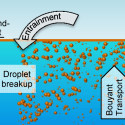
C-IMAGE Research Visualized in Model
The group’s Ecosystem Modeling team recently developed a model illustrating the impacts of oil spills like
Deepwater Horizon. The model includes data such as oil plume and droplet models, high-pressure experiments, sediment analyses, fish and plankton toxicity, and marine mammal movement.
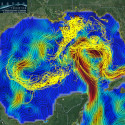
CONORDE Animation Describes Drifter Paths
The short clip tracks the paths of drifters released from the Mobile Bay area during the consortium’s Spring Research Campaign. Click
here to watch the video and
here to learn more about the drifter deployment.
DEEPEND Lesson Plans Introduce Middle Schoolers to the Deep Sea
Researchers visited three sixth grade marine science classes at New River Middle School that had recently completed the consortium’s grade 6-8 lesson plans to discuss how
Deepwater Horizon influenced Gulf of Mexico research and share fish specimens with adaptations to the deep sea.
ECOGIG’s First 2016 Research Cruise Sets Sail
Researchers aboard
R/V Pelican will conduct time-series measurements to track changes in the Gulf. They will use landers to track microbial oil degradation and changes in oxygen concentrations near the seafloor and mini-landers to measure bottom water methane. Moorings will collect information about how particles sink through the Gulf water column using sediment traps.
ACER Explains the Term “Ecosystem Services”
The Word Wednesdays entry describes how healthy, functioning ecosystems benefit humans by providing necessities such as food, supporting genetic diversity and habitats for other organisms, and offering cultural experiences such as recreation. Read the article to learn more!