CONCORDE Launches Fisher Outreach Program
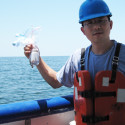
The program will reach out to local professional fishing and ethnic communities with the help of Hoang Nguyen Van and George Barisich, Gulf Coast fishers who assisted in the Fall Research Campaign. The consortium will host community meetings to connect researchers with the public, to communicate research findings, and to strengthen public trust in science through transparency.
CWC II to Host LUMCON Estuarine Awareness and Discovery (LEAD) Summer Camp
The camp offers students grades 9-12 the opportunity to learn how we are all connected to Louisiana’s rich coastal and marine environments through immersive, science-based discovery in the lab, the field, and on research vessels.
Register today!
ACER Discusses the Importance of Oyster Reefs
A recent web article released on the consortium website explains why oyster reefs are a vital coastal ecosystem and describes their critical ecosystem services, including creating habitats, providing food, and protecting shorelines.
ADDOMEx Researchers Participate in Lab Exchange
Consortium scientists at the University of California Santa Barbara recently hosted colleagues from Texas A&M University at Galveston and Canada’s Mount Allison University in an effort to streamline consortium protocols for forming aggregates in roller tables.
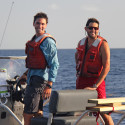
Filmmaker Reflects on CARTHE II LASER Expedition
David Ulloa spent several days aboard
Masco 8 filming the research team in action for the documentary series
Dispatches from the Gulf. He discusses his experiences
here.
C-IMAGE II Researchers Participate in Story Collider Event
The event, hosted by Ari Daniel Shapiro and Erin Baker, allowed four consortium researchers and one editor from the
Tampa Bay Times to tell their stories and discuss their personal connections to the
Deepwater Horizon oil spill. You can see what they had to say
here!
CRGC Reaches Out to Vietnamese Community and Lawmakers
Consortium members recently connected with the local group Boat People SOS and attended their
Vietnamese Lunar New Year celebration in Bayou La Batre, Alabama. They also
met with officials in Lafourche and Plaquemines Parishes in Louisiana to discuss their upcoming work in the area.
COMPASS Interviews DEEPEND and LADC-GEMM Principal Investigators
DEEPEND’s Tracy Sutton and LADC-GEMM’s Natalia Sidorovskaia recently discussed how communication training can benefit researchers who can to clearly and concisely communicate their work to the non-scientific community.
ECOGIG-2 Features Animated Short for #FilmFridays
A recent entry in the consortium’s Film Friday’s series is the animated short film “Stand Up for the Deep,” which discusses the potentially harmful effects of deep-sea fishing on oceans.
RECOVER Releases Episodes 2 and 3 of UMTSI Series
Two new installments in the series of short videos describing consortium research at the University of Texas Marine Science Institute are now available online. Watch “
Gone Fishing: Catching Red Drum for Science” to see how researchers catch red drum for breeding and “
Fish Tattoos” to learn more about the ways oil can affect fish interactions.