|
|
|
|
February 23, 2016 GoMRI eNews
|
|
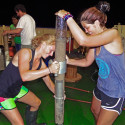
The Ixtoc I blowout happened in the Bay of Campeche over thirty-five years ago, so why are scientists studying this spill now? Because understanding what happened to Ixtoc I oil may help predict if and how Deepwater Horizon oil will degrade, persist, and impact northern Gulf of Mexico ecosystems over the next few decades..
|
|
|
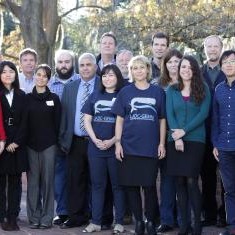
The Littoral Acoustic Demonstration Center-Gulf Ecological Monitoring and Modeling (LADC-GEMM) All Hands Meeting was held December 3rd-4th in Lafayette, Louisiana. Participants met to discuss first year accomplishments, future research, data management, and outreach activities of their exciting marine mammal acoustics research.
|
|
|
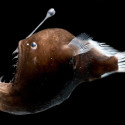
DEEPEND expands knowledge as a restoration tool for the Gulf’s largest ecosystem. Much uncertainty remains about impacts on the deep-sea environment from the 2010 oil spill that erupted more than 5,000 feet below the sea surface.
|
|
|
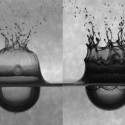
Scientists at Johns Hopkins University used high-speed imaging and digital holography in laboratory experiments to investigate the effects of raindrops falling on a simulated oil slick.
|
|
|
Posted on February 17, 2015
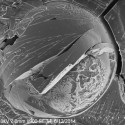
Scientists at the Hamburg University of Technology conducted high-pressure biodegradation experiments simulating conditions at the Deepwater Horizon site.
|
|
|
Posted on February 21, 2014
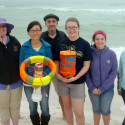
It was a tall order, but high school students rose to the challenge: they integrated physics, engineering, and scientific curiosity and created functional data-gathering drifters.
|
|
|
Posted on February 11, 2013
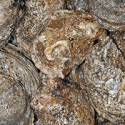
Separate groups of scientists studying the Deepwater Horizon oil spill impacts on oysters along the Gulf coast recently published their findings in two journals.
|
|
|
Study Uses Oil Droplet Size to Measure Dispersant Effectiveness.
Effects of droplet size on intrusion of sub-surface oil spills. Chan, et al., Environmental Fluid Mechanics 2015, 15, 5, 959-973.
Study Shows Dispersed Oil Inhibits Plankton Growth Rate
Dispersant Corexit 9500A and chemically dispersed crude oil decreases the growth rates of meroplanktonic barnacle nauplii (Amphibalanus improvisus) and tornaria larvae (Schizocardium sp.). Almeda, et al., Marine Environmental Research 2014, 99, 212–217
Study Describes Mechanisms Driving Oil Slick Patterns on Surface Waters
Inhibition of oil plume dilution in Langmuir ocean circulation. Yang, et al., Geophysical Research Letters 2014, 41, 5, 1632–1638
|
|
The Gulf of Mexico Research Initiative (GoMRI) is pleased to announce the development of the GoMRI Request for Proposals for 2018-2019 to fund research activities for GoMRI Years 9-10 (1 January 2018–31 December 2019). This RFP-VI, to be released in October 2016, will build on previous RFPs, will be the final research competition, and will only fund two-year awards.
|
|
ACER Answers the Question: “What Is a Mesocosm?”
The latest entry in the Took Talk series – which explains consortium scientists’ more common research methods and technologies – is all about this popular method for simulating ocean conditions in a more-controlled environment.
CARTHE Releases Aerostat Footage
A short time-lapse video taken aboard the Masco VIII shows how researchers prepare, release, and recover the helium-filled aerostat balloon. The aerostat creates its own lift to help keep the ship’s aerial photography system aloft.
CWC to Host Art & Science Summer Camp
Campers grades 8-12 will become both scientists and artists as they engage in science-based exploration of coastal marshes and translate their observations and experiences into works of art. Register today!
CONCORDE Scientist’s Algal Bloom Research Featured in Student Paper
Dr. Inia-Soto Ramos discussed the recent toxic algal bloom, or “red tide,” along the Gulf Coast with the University of Southern Mississippi’s Student Printz, explaining what the phenomenon is, what likely caused it, and what it means for the area’s oyster population.
CRGC Joins Facebook
The consortium seeks to improve oil spill responses and create products that will be collectively used and informed by each audience. “Like” their new page to keep up with their research and activities!
ECOGIG Announces Ocean Discovery Summer Camp
The June 2016 camp is open to students grades 4-9 and will use hands-on exploration, projects, and crafts to promote scientific literacy, introduce marine science research tools and technology, and highlight the importance of a healthy ocean. Register here (open through April 15)!
Get to Know C-IMAGE Student of the Month Travis Washburn
Ph.D. student Washburn is researching how Deepwater Horizon and natural seeps affect benthic Gulf communities and how those deep-sea communities affect humans. Check out his feature to read more about his research and learn his answer to the question “Why does the deep sea matter?”
RECOVER Clip Discusses Importance of Location to Oil Spill Research
RECOVER scientist Andrew Esbaugh explains why the area surrounding Corpus Christi and Port Aransas, TX, is ideal to study the effects of the Deepwater Horizon oil spill.
|
|
|
|
|
|
|