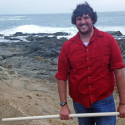
Chemical engineer Jordan Young has found his happy place on a research vessel in the Gulf of Mexico. He’s looking for changes in ocean acidity following the Deepwater Horizon spill. As the oil biologically degrades, some of it oxidizes to carbon dioxide and may increase acidification.
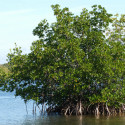
Scientists evaluated the effects of oil contamination on coastal mangrove plants. Their partially-submerged root system makes them vulnerable to pollutants. Scientists found that oil coated the mangrove roots and reduced water transport, leading to rapid plant dehydration.
Chemists from Oregon State University developed a method that detects and measures the chemical composition of the four Corexit surfactants in seawater.
Participants received professional development credits for the state of Louisiana, and they came away with working knowledge about the realities and processes involved with ocean research.
In the aftermath of the Deepwater Horizon oil spill (DHOS), the National Commission on the BP Deepwater Horizon Oil Spill and Offshore Drilling estimates that responders sprayed over 1.8 million gallons of the dispersant Corexit 9500 into the northern Gulf of Mexico (GOM).
Scientists will share their research addressing deep sea oil spill impacts on Dec 8 at the Harte Research Institute, Corpus Christi, TX. Click here to register. People can participate in-person or remotely.
Click here to listen to videos or view slides of scientists' presentations on seafood testing, break down of oil contaminants by marine life, and monitoring seafood safety.
Project Activities
CARTHE and RECOVER Participate in Women in Science Day Workshop
Middle school girls were able to do hands-on marine science activities with female researchers and graduate students from both projects during the annual University of Miami workshop. You can view photos from the event here and here and read two RECOVER Ph.D. students’ reflections on the experience here!
ADDOMEx Shows Off Roller Tanks
Check out this photo to get a look at the consortium’s new glass roller tanks! The tanks’ rounded structure allows it to spin at a rate that will keep the particles inside suspended in water.
WUSF Hosts Radio Interview with C-IMAGE Researchers
Scientists Dana Wetzel and Ben Prueitt sat down with WUSF’s Steve Newborn earlier this month to discuss Mote Marine Laboratory’s exposure trials, which will examine how oil affects fish. The full interview is available on the WUSF website.
CWC “Discovering Oceanography” Workshop Postponed
Now scheduled for January 16, 2016, there is still time to register for the family workshop! Teens and their guardians will learn about different aspects of oceanography through hands-on activities such as dissection and constructing their own remotely operated vehicles.
Research Cruise Experiences Featured on CONCORDE Blog
Two research vessels deployed sensors and collected plankton and water quality data in late-October/early-November for the project’s Fall Research Campaign. Team members used the Concordia Blog to record their scientific and behind-the-scenes activities aboard R/V Point Sur and R/V Pelican.
DEEPEND Video Explores Deep Sea Pressure
The short clip uses a deep-water experiment involving SCUBA divers and chicken eggs to explain the mechanisms and potential danger of underwater pressure. Check out the clip to learn more!
ECOGIG Researchers Named ASLO Fellows
Uta Passow and Samantha Joye were recently recognized as sustaining fellows for continued excellence in their contributions to ASLO and the aquatic sciences. Congratulations!