GoMRI eNews · Jun 30, 2015 · ← All issues
Help Share. Know three people interested in Gulf science? Please forward this email and share if you find it valuable.

Keeping you current on emerging Gulf science and the people investigating the effects of oil spills on the environment and public health.

June 30, 2015                                                                    GoMRI eNews

Stories

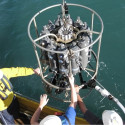
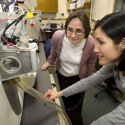
Smithsonian’s Five Questions with Biological Oceanographer Uta Passow

Phytoplankton are active organic carbon producers and help drive the processes that move carbon from the ocean surface to the sea floor. Scientists are investigating impacts from the sudden large input of carbon from the Deepwater Horizon spill on this important biological cycle.

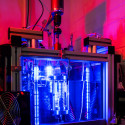
Study Estimates Subsea Dispersant Marginally Reduced Surface Oil

Scientists at the University of Miami and the University of Western Australia measured oil droplet size and simulated oil dispersion under conditions similar to those at the Deepwater Horizon wellhead.

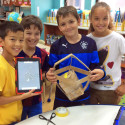
Bob The Drifter Inspires Singapore Classroom to Conduct Oil Spill Research Experiment

A fourth grade class at Singapore American School found Bob the Drifter and the CARTHE science group while researching ocean science and pollution online.

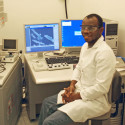
Grad Student Owoseni Uses Small Particles to Tackle Large Spills

An interest in oil spill research led Olasehinde Owoseni from Ile-Ife, an ancient city in Nigeria, to the Louisiana coast. Such a change might seem intimidating, but Sehinde sees it is as a small step toward his greater goal.

From the Archives

Study Identifies Potential Oil Degradation Signal in Coastal Waters

Scientists from Texas, Delaware, and Louisiana conducted a multiyear study examining coastal waters in the Gulf of Mexico to determine if hydrocarbons from the Deepwater Horizon oil spill had changed the water column chemistry.

Polar Oil: When Oil and Water Mix

Oil and water don’t mix, right? For the most part, that’s true. Oil is made up of many compounds, the majority of which are not water soluble or “non-polar” in scientific terms. When oil enters water, such as from a spill, most of it gathers together in balls or sheets.

Publications

Study Describes Oiling Impacts on Marsh Grass and Shoreline Erosion
Effects of oil on the rate and trajectory of Louisiana marsh shoreline erosion,  McClenachan, G.; Turner, R.E.; Tweel, A.W. Environmental Research Letters, 2013, 8, 4, 044030
 
Study Uses New Technique to Estimate Oil on Surface Waters
Oil Spill Mapping and Measurement in the Gulf of Mexico With Textural Classifier Neural Network Algorithm (TCNNA), Garcia-Pineda, O.; MacDonald, I.R.; Li, X.; Jackson, C.R.; Pichel, W.G., IEEE Journal of Selected Topics in Applied Earth Observations and Remote Sensing, 2013, 6, 6, 2517 - 2525

Announcements

 
On May 20 the Louisiana Sea Grant hosted a seminar "Understanding the toxicity of oil and dispersant mixtures, and the development of alternative dispersants." Watch an archived video recording of the seminar. View slide presentations by Dr. Emily Maung-Douglass of Louisiana Sea Grant (dispersants in spill response); Dr. Christopher Green of Louisiana State University AgCenter (grass, microbes, and animals); and Dr. Andrew Nyman of Louisiana State University AgCenter (killifish).
 
Session proposals are being reviewed, and call for abstracts and conference registration opens in August.

Archived GoMRI Newsletters
View past issues of the bi-weekly GoMRI eNews here and of the quarterly GoMRI Public Newsletter here.

Project Activities

DROPPS and CARTHE Team Up For Summer Science
The consortia participated in the University of Texas at Austin Summer Science program to teach 3rd – 8th grade kids about ocean currents and help them release their own hand-decorated drift cards.
 
DEEPEND Invites Students to “Creep into the Deep”
DEEPEND will lead the September installment of WhaleTimes’ virtual research mission series Creep into the Deep, which allows 3rd – 6th graders to become virtual consortia members and investigate the biodiversity and distribution of deep sea creatures. Register your student now!

SailDrone Helps ECOGIG-2 Researchers Observe Natural Gulf Oil Slicks
ECOGIG-2 scientists identified potential future Gulf of Mexico research sites using data from the autonomous marine data logger SailDrone, which observed strong currents stretching slicks of natural oil to unusual lengths and areas of surfacing oily bubbles in existing study sites.
 
C-IMAGE Announces Partnership with Agilent Technologies
The partnership will provide high-performance instrumentation that will allow researchers to more accurately trace the fate of oil and better understand its effects on the environment.
 
RECOVER Consortium Launches Instagram Account
You can now follow the RECOVER Consortium on their Instagram page (@recover_consortium) for an exclusive look at their ongoing research. Those without an Instagram account can still check out the group’s page here.