|
|
|
|
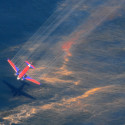
The prevention or reduction of coastline oiling was high on responders’ priorities immediately following the 2010 Deepwater Horizon oil spill. Five years later, much discussion continues about balancing benefits and risks regarding dispersants, and there are increased research efforts for alternatives or enhancements to existing dispersant systems.
|
|
|
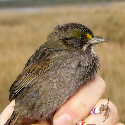
Dr. Sabrina Taylor has shared multiple datasets supporting long-term ecological research. This work assesses density, diet, movements, nest success, and gene expression patterns of Seaside Sparrows (Ammodramus martimus) to determine oil spill impacts in the marshes. GRIIDC Data Article
|
|
|
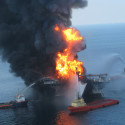
On behalf of the GoMRI science community, the Research Board extends our thoughts and prayers to those who lost their lives on April 20, 2010 and their families and to those whose health and livelihoods were impacted.
|
|
|
|
If another oil spill were to occur in the Gulf of Mexico today, have there been scientific advances and new tools developed that could better inform response decisions? Have communication and collaboration among scientists and responders improved? Yes and yes.
|
|
|
Since August 2011, eight research consortia funded by the Gulf of Mexico Research Initiative (GoMRI) have been working hard to understand impacts from and responses to the Deepwater Horizon incident.
|
|
|
Often misunderstood by the public, dispersants are the single biggest weapon in the arsenal of those combating an oil spill.
|
|
|
Study Highlights Cascade of Microbial Processes Involved in Oil Degradation
Study Demonstrates Chemical Method to Analyze Oiled Louisiana Wetland Sediment
Early Post-Spill Study Shows Initial Spatial Distribution and Concentrations of PAHs
Characterization of subsurface polycyclic aromatic hydrocarbons at the Deepwater Horizon site. Diercks, A.R.; Highsmith, R.C.; Asper, V.L.; Joung, D.J.; Zhou, Z.; Guo, L.; Shiller, A.M.; Joye, S.B.; Teske, A.P.; Guinasso, N.; Wade, T.L.; Lohrenz, S.E. Geophysical Research Letters, 2010, 37, L20602
|
|
The 6 pm seminar will be held at the University of Louisiana at Lafayette. Speakers will discuss toxicity of oil and dispersant mixtures and the development of alternative dispersants.
Monica Wilson with Florida Sea Grant gives explains how GoMRI is providing science-based information to people whose livelihoods depend on a healthy Gulf.
|
|
|
|
|
|
|