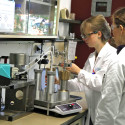
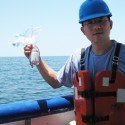
Scientists at the Hamburg University of Technology conducted high-pressure biodegradation experiments simulating conditions at the Deepwater Horizon site.
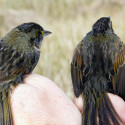
Seaside Sparrows live and forage in coastal marshlands across the Gulf of Mexico. Scientists are studying oil’s effects on their habitat and the potential long-term impacts on sparrow populations in these areas.
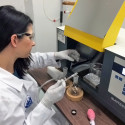
Scientists from the University of New Orleans and Florida State University conducted simulated sunlight exposure experiments to determine sunlight’s effects on oil fate.
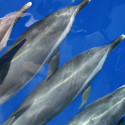
Did whale and dolphin populations change after the oil spill? Prior monitoring indicated that large numbers of these deep-diving marine mammals were living near the Deepwater Horizon site.
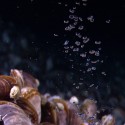
Scientists confirmed that methane-derived carbon, likely from the Deepwater Horizon oil spill, entered the food web via small particles through a pathway known as methanotrophy.
Scientists studying the weathering processes that altered the oil released during the Deepwater Horizon spill recently published their findings in the September 2012 Issue of Environmental Research Letters.
Publications
Study Uses Oil Droplet Size to Measure Dispersant Effectiveness
Recently-funded RFP-IV consortia have research, administration, and outreach opportunities available for graduate students, post docs, and senior science personnel.
Annette Engel at the University of Tennessee studies bacterial diversity and oil degradation processes in Louisiana marshes. Listen to a podcast that highlights Engel's work: Oil Spill Research gets Boost from Supercomputing!